
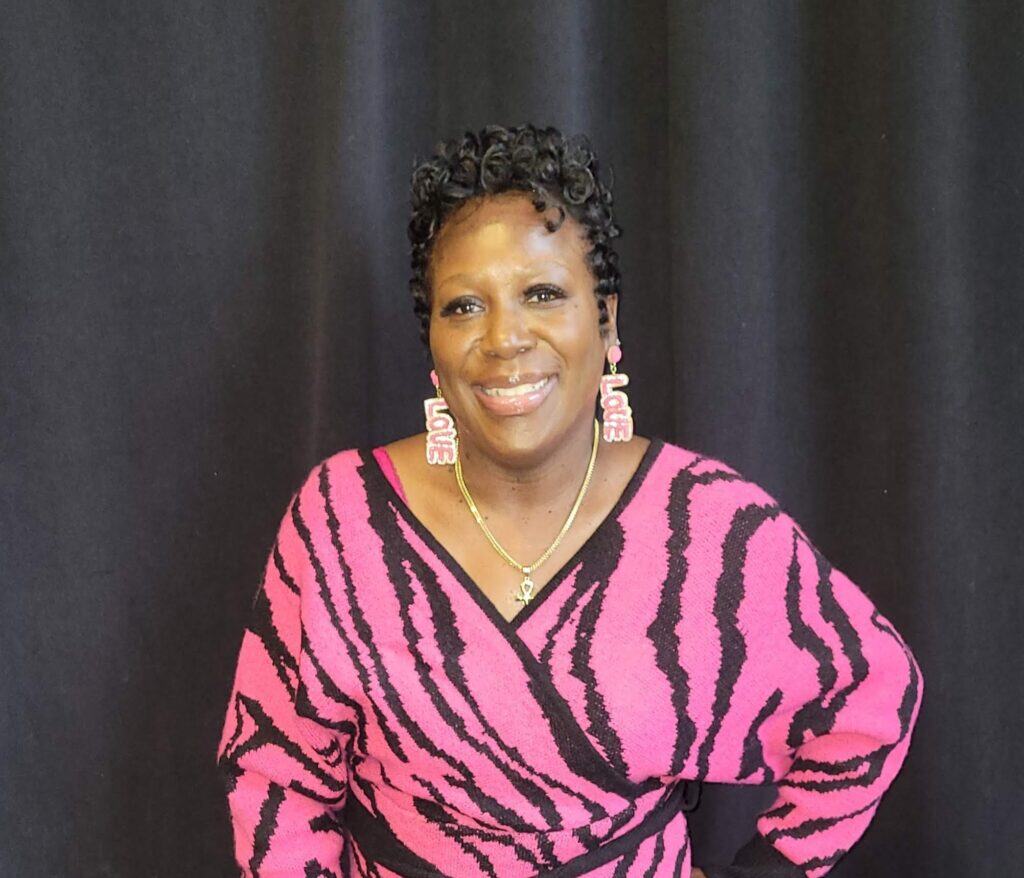
In February 2021, Tennille Smith was diagnosed with stage 2 breast cancer. In October 2021, she completed treatment and, just a month later, she received devastating news: The cancer had spread and she now had metastatic breast cancer (MBC), for which there is no cure today.
Heartbreaking News
Tests confirmed Tennille’s MBC had spread to her brain and throughout her body. “It’s heartbreaking,” Tennille said. “Going from stage 2 to stage 4 within such a short time shows how unpredictable breast cancer is, and why it’s so important to stay vigilant after finishing treatment.”
A Genetic Connection
“When I was first diagnosed, we didn’t even know cancer was in the family,” Tennille said. “My mom said she didn’t know where my cancer came from, because it doesn’t run in our family.”
As it turns out, however, cancer does run in Tennille’s family, specifically on her mother’s side. Genetic testing showed Tennille was positive for a BRCA inherited gene mutation. “My doctor told me to tell my family about the test, so I encouraged everyone to get tested,” she said. Her mother also has the BRCA inherited gene mutation; however, Tennille’s two sons do not.
While Tennille’s mother has not moved forward with risk-reducing measures, she is being monitored every 3 to 6 months by her doctor. “Maybe it’s being scared, maybe it’s being naïve,” Tenille said. “I hoped that after everything I’ve been through, my mom would act.”
Maternal Grandfather’s Prostate Cancer
As Tennille delved further into her family’s health history, she learned her grandfather had prostate cancer when he was in his 70s. “He was one of those men from a generation that didn’t believe in going to the doctor,” she said. “If he had a pain or an ache, he had a home remedy. He did not believe in going to the doctor.”
Tennille’s grandfather also did not really share much about his diagnosis with the family. By the time he did, he had started radiation therapy, but ended up stopping because of side effects. “If he had gone for treatment when he first found out, he may have lived longer,” Tennille said.
Learning the Connection Between Breast and Prostate Cancers
When Tennille was first diagnosed with breast cancer, she had no idea it could have been connected to her grandfather’s prostate cancer. “That’s why I was at an increased risk for breast cancer,” she said. That information didn’t come until later, when Tennille’s genetic counselor talked to her about testing positive for a BRCA inherited gene mutation.
“We went through my family history and she did a family tree and bloodwork,” Tennille said. “She explained where it had come from.”
Another Family Prostate Cancer Diagnosis
Tennille’s uncle – her mother’s brother – recently learned he has prostate cancer. “He was just diagnosed, so he’s just beginning everything,” she explained. “He had not felt fine for a while and was resistant to going to the doctor, but he finally did, so now we’re dealing with this.”
Given her own genetic test results, Tennille hopes her uncle will also have genetic testing. “I’ve asked him to have it done,” she said. “I want his kids to have it done, too.”
The Importance of Genetic Testing & Family History
“It is so important for people to have genetic testing if they know cancer runs in their family,” Tennille said. “It’s heart-wrenching that not everyone in my family has done it. It’s important to act, to know your history, because it can save so many lives in your family.”
Treatment for MBC
Tennille’s current treatment includes three chemotherapy pills in the morning and three in the evening. She also has regular PET scans, blood work and MRIs. “My doctor said I’m doing well. This is an aggressive cancer and it hasn’t spread anymore,” she said. “I feel great at times, but I’ve also felt really tired. You wonder if it’s because you’re doing a lot or if it’s the cancer.”
Moving Forward
“I can’t stress enough how important it is to get your mammograms; early detection is crucial,” Tennille said. “Cancer is not a death sentence. It’s easy to let it consume you, and I’ve certainly felt depressed at times, but you have to get up each day, get ready and face the world. I have stage 4 breast cancer, but I’m still here, fighting every step of the way.”
Statements and opinions expressed are that of the individual and do not express the views or opinions of Susan G. Komen. This information is being provided for educational purposes only and is not to be construed as medical advice. Persons with breast cancer should consult their health care provider with specific questions or concerns about their treatment.

Both women and men can have a BRCA gene mutation, which can be passed on (inherited) from either the mother or father to their daughter(s) or son(s). If there’s a history of breast and prostate (or other) cancers in your family, talk to your doctor or a genetic counselor to see if genetic testing is right for you and your family. To learn more, visit BRCAinmen.com.