Written by Center for Public Policy Staff
Every day, Komen advocates turn their personal experiences into real change for the breast cancer community. By taking action on state and federal legislation, sharing their stories, or meeting directly with policymakers, Komen advocates support policies that improve access to high-quality care and reduce barriers for patients to receive that care.
This year, Susan G. Komen’s Center for Public Policy and breast cancer advocates are supporting two federal bills that would increase access to and affordability of breast cancer screening and early detection. Recently, one of Komen’s Advocacy Ambassadors, Kathi Wolder, used her voice to support these important bills.
The Bills That Would Increase Access
The Access to Breast Cancer Diagnosis (ABCD) Act, H.R.3037/S.1500
Most health insurance plans cover the full cost of annual screening mammograms. But if a patient’s mammogram shows something that needs follow up imaging, next steps such as an MRI or ultrasound often come with additional expense. This can leave patients with hundreds, even thousands of dollars in out-of-pocket cost.
In a single year, more than 1 million women may delay or skip the diagnostic imaging they require due to cost. Without this imaging, patients may not get a diagnosis or care for breast cancer until the disease has advanced. The longer breast cancer goes without treatment, the more deadly it becomes, as well as more costly to treat.
The ABCD Act would make sure that private health insurance plans cover the full cost of diagnostic and supplemental breast imaging, ensuring no patients are stuck paying out-of-pocket expenses for the tests they need.
The Screening for Communities to Receive Early and Equitable Needed Services (SCREENS) for Cancer Act, H.R.2381/S.1866
For more than 30 years, a state-federal partnership program called the National Breast and Cervical Cancer Early Detection Program (NBCCEDP) has helped people without adequate health insurance access cancer screenings and follow-up care. These services save lives and lower health-system costs.
The SCREENS for Cancer Act would reauthorize the NBCCEDP for an additional five years and modernizes the program’s ability to meet the unique needs of communities today. The bill will allow for expanded access to breast and cervical cancer services in rural and urban communities alike, leading to more people being screened, more cancers being diagnosed at earlier stages and ultimately better outcomes for people and lower costs for our health care system.
Turning Your Story into Action
Thousands of bills are introduced in Congress every year. How can one issue stand out to get a legislator’s attention and support? When advocates share their stories, they put a real person behind the policy. Personal stories are one of the most powerful ways to influence breast cancer policy.
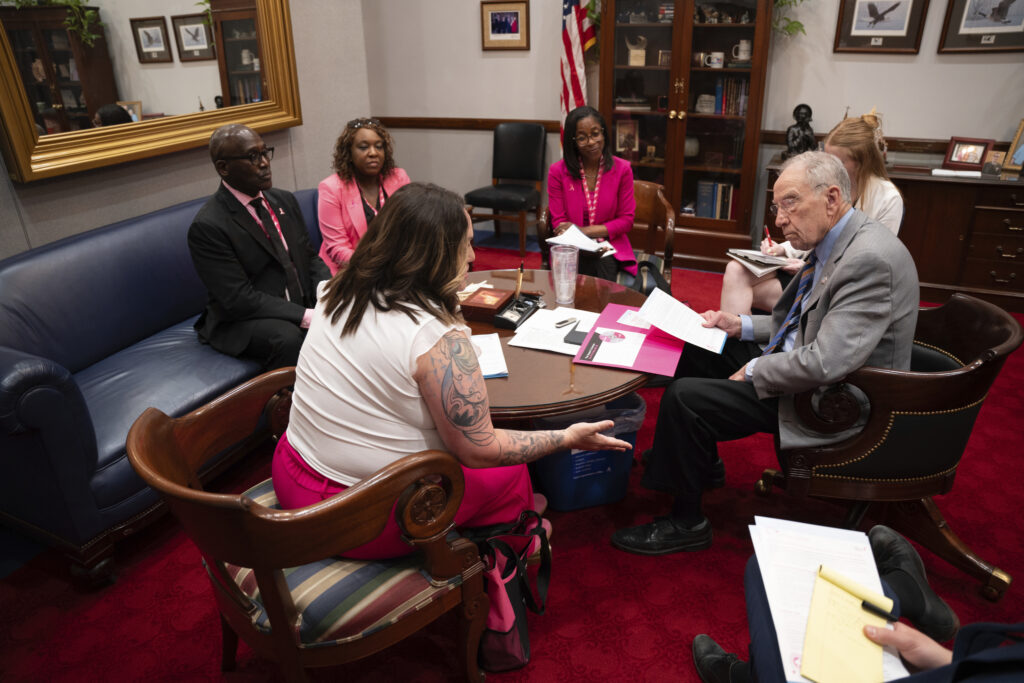
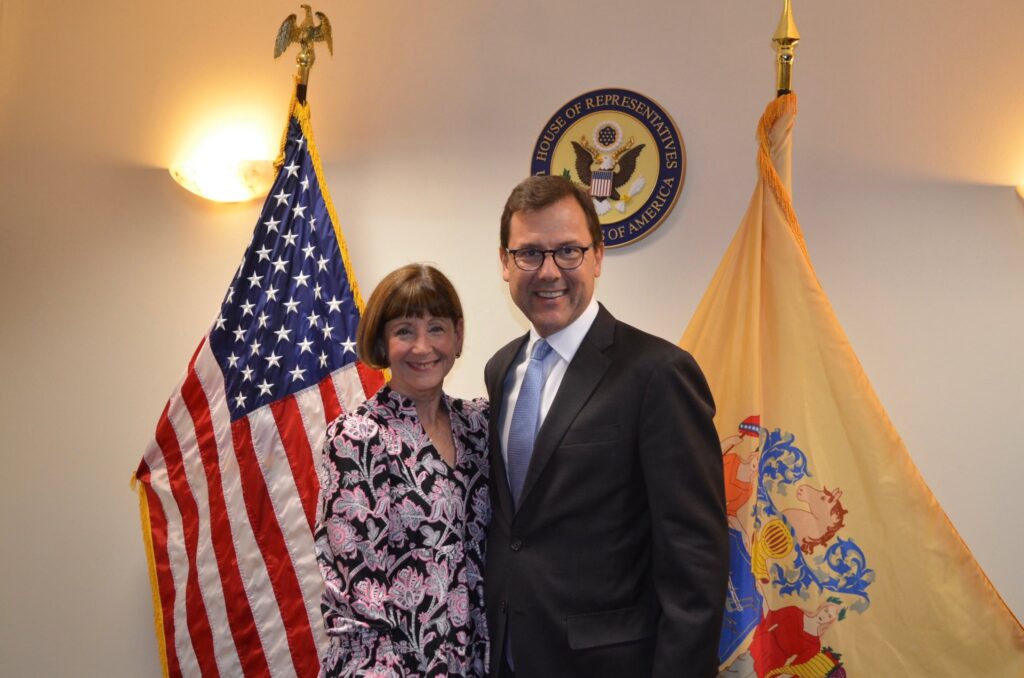
Komen Advocacy Ambassador Kathi Wolder recently met with her representative in Congress, Rep. Tom Kean (NJ-7), to share her story and discuss the importance of the ABCD and SCREENS for Cancer Acts. Following their meeting, Rep. Kean co-sponsored both bills. When a member of Congress co-sponsors a bill, they are making a public commitment to support it. The more co-sponsors a bill has, the more momentum it gains and the stronger its chances of becoming law.
Thanks to Kathi’s impactful meeting and Rep. Kean’s support, these two critical breast bills are closer to passage. Kathi’s advocacy efforts are a reminder that all it takes is one voice to make a meaningful impact.
Kathi’s Advice for Advocates
As a longtime Komen Advocacy Ambassador, Kathi offers advice for others who want to make an impact.
Preparation Is Key
Meetings with lawmakers and their staff are often short, and preparation makes all the difference. Kathi emphasizes that your story should be focused and clearly tied to the legislation.
Her tips include:
- Focus on how your story connects to the bill and why it matters
- Clearly explain what the bill does and do not assume prior knowledge
- Know whether the lawmaker has already supported the bill
- Being prepared shows credibility and respect for their time
Komen’s Center for Public Policy staff work directly with advocates to prepare them for meetings with legislators.
Make It Personal, Build Relationships
Advocacy is also about building relationships. Kathi recommends doing your homework before meetings to find shared connections or experiences. Focus on explaining why the issue matters to your community. Kathi says, “Get to the core of moving that person emotionally.”
Everyone Can Advocate
Kathi’s experience shows that advocacy is not just for policy experts. Everyday people who care about breast cancer can make an impact. You can take action today by supporting the ABCD Act and SCREENS for Cancer Act through Susan G. Komen’s action center. In just a few clicks, you can let your members of Congress know why these issues matter to you and the breast cancer community.