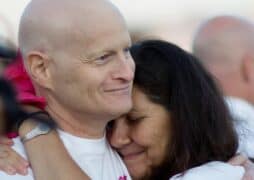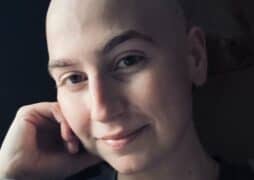
Mellissa Walker was diagnosed with breast cancer when she was 48. This is her story in her own words.
In September 2024, I went for my routine mammogram – just another screening appointment. But this time, the results were different. The mammogram detected a lump in my right breast that I couldn’t feel. An ultrasound and biopsy followed. On Oct. 28, 2024, I received the call that would change my life: I had breast cancer.
The Diagnosis
Further testing revealed not just one concern, but multiple areas throughout my right breast: invasive ductal carcinoma, extensive DCIS and other pre-cancerous changes. What made my journey even more significant was my family history, which includes stage 4 (metastatic) breast cancer, colon cancer and soft tissue sarcoma. Cancer runs deep in my family, making genetic counseling a crucial part of my care.
My cancer had hormone receptor-positive (ER+/PR+) and HER2-negative characteristics that would guide my treatment decisions. The Oncotype DX genomic test showed a recurrence score of 13, meaning hormone therapy alone would be sufficient. I would not need chemotherapy or radiation.
The Decision
Given the extent of concerning tissue and my family history, a lumpectomy wasn’t viable. I chose bilateral mastectomy, removing both breasts for peace of mind and to minimize future surgeries and anxiety.
The Journey
In January 2025, I underwent bilateral mastectomy with tissue expander reconstruction. The surgery confirmed all six lymph nodes tested were negative – the cancer hadn’t spread. But recovery was challenging. Managing four surgical drains for weeks, dealing with extreme fatigue, adjusting to limited mobility and navigating the emotional rollercoaster of body changes tested me daily.
August 2025 brought my final reconstruction surgery, which was moved up when my plastic surgeon announced he was leaving practice but chose to stay specifically to see me through recovery. This surgery included placement of permanent implants, fat grafting and addressing extensive scar tissue discovered during the procedure.
The Support
I couldn’t have survived this without my village. Friends rotated staying with me after surgeries, attending appointments, asking doctors questions, managing meals, caring for my adult son with autism and knowing exactly when I needed space versus company. Even when I was difficult, and I was sometimes, they never quit on me.
The Milestones
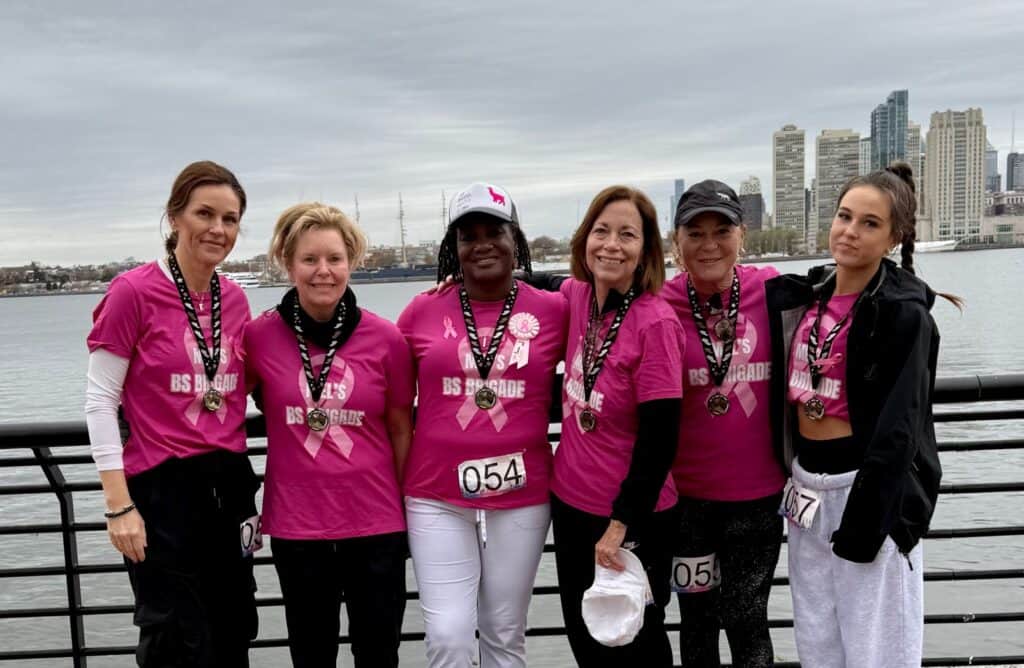
Driving myself to appointments again felt like freedom. Completing my first 5K walk in Philadelphia with friends showed me my body could still achieve. Traveling to see family and reconnecting with old friends reminded me life continues beyond cancer. Returning to cardio dance classes, wall Pilates and yoga proved I’m reclaiming my strength.
What I’ve Learned
- Not all breast cancers are the same. My sister’s ER+/HER2+ cancer required completely different treatment than mine. You cannot compare one person’s journey to another person’s journey – each diagnosis is unique.
- Routine mammograms save lives. Mine detected cancer I couldn’t feel. This is why regular screening matters so much. Early detection gave me options and a better prognosis.
- Support matters more than you know. Show up consistently, not just at diagnosis. Ask specific questions like “can I bring dinner Tuesday?” instead of “let me know if you need anything.” Let survivors be angry, scared or negative without trying to fix them. The “casserole effect” is real. Support peaks at diagnosis, then drops dramatically, but support needs to continue for months or years.
Looking Forward
One year ago, I was terrified. Today, I’m grateful. I’m on tamoxifen for the next 5-10 years to prevent recurrence. I’m utilizing resources at my cancer center, including therapy sessions, workout classes and acupuncture.
My Message
If you’re facing breast cancer, know you can do this. Build your village. Advocate for yourself. Ask questions. Take it one day at a time. It’s okay to not be a “warrior.” Some days you’ll be strong, many days you won’t. Both are valid.
If you’re supporting someone with cancer, your presence matters more than your words. Your consistency matters more than grand gestures. Your willingness to sit with their fear matters more than your
And please, get your regular mammograms. They save lives.
Here’s to early detection, excellent medical care, clear margins and support systems that never quit. Here’s to many healthy years ahead.
Statements and opinions expressed are those of the individual and do not express the views or opinions of Susan G. Komen. This information is being provided for educational purposes only and is not to be construed as medical advice. Persons with breast cancer should consult their health care provider with specific questions or concerns about their treatment.