

Here are four things to know about clinical trials before going any further after a breast cancer diagnosis. You may feel a sense of urgency, but knowledge is power and a critical tool to advocate for your care. Clinical trials are how researchers find better ways to prevent, detect and treat breast cancer. They are the reason that every treatment, from hormone therapy to targeted medications, exists. And they aren’t just for late stages of the disease; they could be right for you and your care at any step along the way.
The treatments we have today, and the ones we’ll have tomorrow, all exist because of clinical trials. They provide evidence that a new treatment works better than the current standard of care, improving patient outcomes and quality of life. By participating in a clinical trial, people may receive advanced therapies not yet widely available while helping move research forward for future patients.
Dedicated physicians and researchers, as well as hospitals, medical centers and funders, support clinical trials; however, the participants are the essential component.
Here are four things you should know:
1. There are different types of clinical trials
Clinical trials aren’t just for evaluating new drugs; they also test new ways of delivering care. Breast cancer trials focus on different aspects of care:
- Prevention trials explore ways to lower risk.
- Treatment trials test new drugs or combinations of drugs and different doses.
- Screening/diagnostic trials study detection methods.
- Quality-of-life trials look at side effects, mental health, cognition and other survivorship issues.
All of these opportunities are designed with safety as a top priority to benefit you and to better understand breast cancer.
Clinical trials also progress through phases:
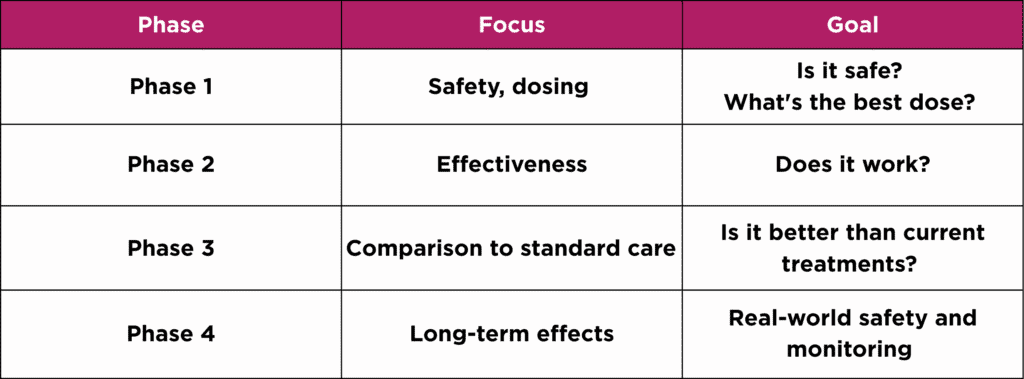
Not all clinical trials fit neatly into one category. Some trials may be a combination of two categories, such as a phase 1/2 or phase 2/3 trial.
2. Clinical trials may be available at any step of the way
You don’t need to wait until later stages of breast cancer to qualify for a trial. Some focus on early-stage breast cancer in order to study things like treatments given before surgery (neoadjuvant therapy), while others may be for those with metastatic breast cancer.
The best times to consider joining a clinical trial are:
- When newly diagnosed
- If you experience a breast cancer recurrence
- When newly diagnosed with metastatic breast cancer or are considering changing treatment for metastatic breast cancer.
It’s best to start the conversation with your doctor about clinical trials early since some treatments can make you ineligible for future studies. But again, it’s never too late to ask.
Trial eligibility can be based on things like:
- Cancer stage and subtype
- Biomarker status (for example: HER2, hormone receptor status, etc.)
- Genetic mutations (such as BRCA1/2)
- Previous treatments and medications
- Present or past health conditions
3. What to expect if you join a clinical trial
Choosing to participate is a personal decision, and you are always in control every step of the way. Should you enroll in a trial, you will receive quality care no matter what – meaning that you will either be given the current standard treatment or the standard treatment in addition to the new therapy being tested.
You can opt out at any time; your participation is voluntary, always. You will be walked through every step and all of the information and can ask questions for clarity throughout the process.
Safety is the priority. Trials are reviewed by ethics committees. They follow strict safety protocols, and you are monitored throughout. You may have extra visits and tests, especially to ensure safety and to monitor progress as the care teams collect data points for helping those diagnosed in the future. This may add time and travel, but you can get help managing this.
Costs can vary. Clinical trials typically cover the investigational treatment, while insurance covers the standard of care. It’s a good idea to discuss this with your care team ahead of time.
4. How to find and join a clinical trial
Start by asking your doctor or patient navigator as early as possible. Komen also has trusted resources that can help as well:
- Metastatic Trial Search – For people diagnosed with metastatic breast cancer, BreastCancerTrials.org in collaboration with Komen offers a web-based personalized clinical trial matching tool.
If you or a loved one needs information or resources about clinical trials, please call our Breast Care Helpline at 1-877 GO KOMEN (1-877-465-6636) or email clinicaltrialinfo@komen.org to connect with a trained specialist. Our caring and trained staff provide support and education about clinical trials to help people gain a better understanding of clinical trials.
Watch Komen’s “Inside MBC: Thoughts on Clinical Trials”
We’d love your thoughts!
Take our brief survey and browse the rest of the Know More series here.