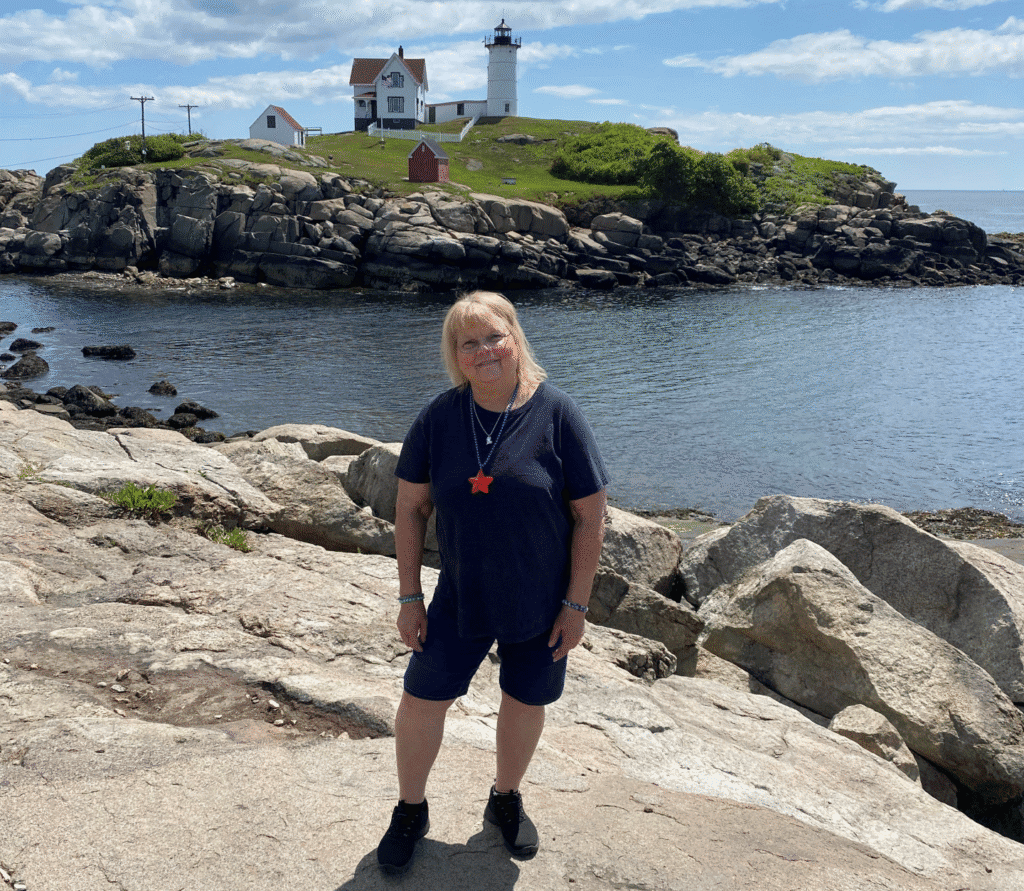
Five years after completing her treatment for breast cancer, Linda Norman faced a new, life-changing diagnosis: metastatic breast cancer (MBC). As she navigated fatigue, joint pain and the emotional toll of her diagnosis, she found unexpected relief and strength through exercise. For Linda, exercise didn’t just help her body, it became a key part of managing her life with MBC.
Breast Cancer Diagnosis After an Abnormal Mammogram
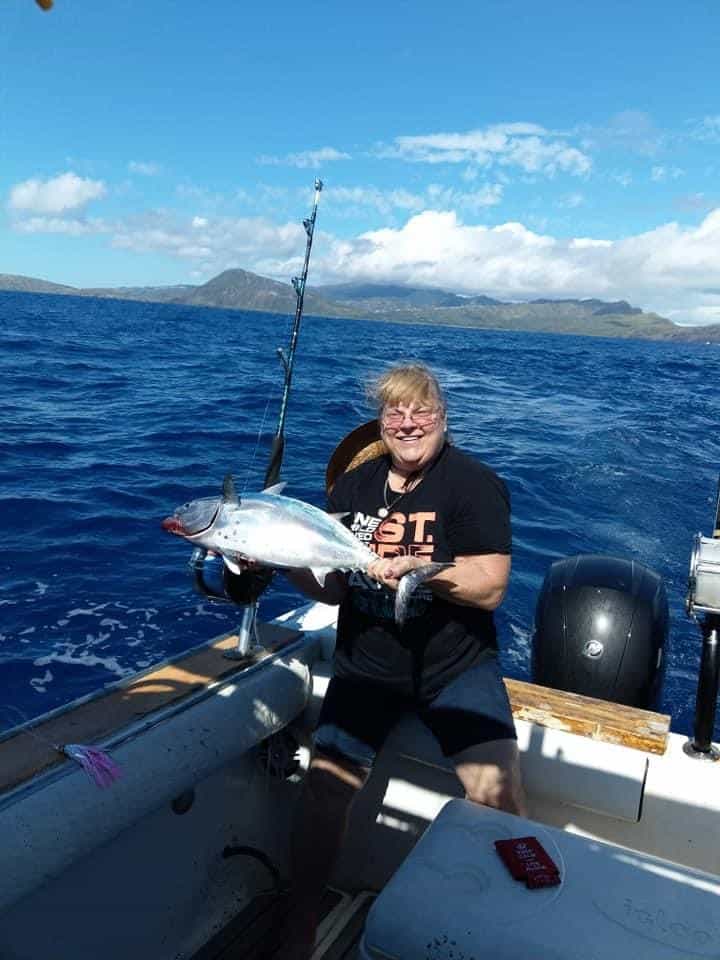
In January 2019, Linda was just weeks away from celebrating a milestone birthday – her 60th – with a visit to a friend in Hawaii. Then, during her annual mammogram, a small mass was detected in her left breast. A biopsy later confirmed it was breast cancer.
Linda underwent a lumpectomy to remove the tumor and was given permission by her doctor to travel to Hawaii in time to celebrate her birthday.
After she returned home, she had 10 radiation treatments over a two-week period. She was then prescribed anastrozole (an aromatase inhibitor), but the medication caused her to have extreme joint pain.
She transitioned to tamoxifen (a hormone therapy) and went back to work.
Everything Seemed Fine, Then the Pain Started
“Everything was normal for almost five years, but I soon began experiencing some pain and discomfort in my breast,” Linda said.
She spoke to her doctor, who recommended she undergo a breast ultrasound after an inconclusive mammogram. “I knew when the doctor came back in the room with the ultrasound technician that the news wasn’t good. She said I was going to have to go for another biopsy.”
More Tests to Determine the Diagnosis
The biopsy confirmed that Linda’s breast cancer had returned. She underwent a PET scan to determine whether the cancer had metastasized (spread), which was information she and her doctor needed to help them decide on a treatment plan.
“The scan was on a Thursday, and I wouldn’t know the results until the following week,” she said. “To help take my mind off of the what ifs, my sister invited me to come stay with her in Florida for the weekend.”
An Unfortunate Accident While Visiting Family
The family planned a trip to watch the sunset on Linda’s first evening in Florida. While leaving the house, Linda missed a step and fell off the porch. She quickly realized something was seriously wrong with her arm. She cleaned up her bloody nose and her sister took her to the nearest emergency room.
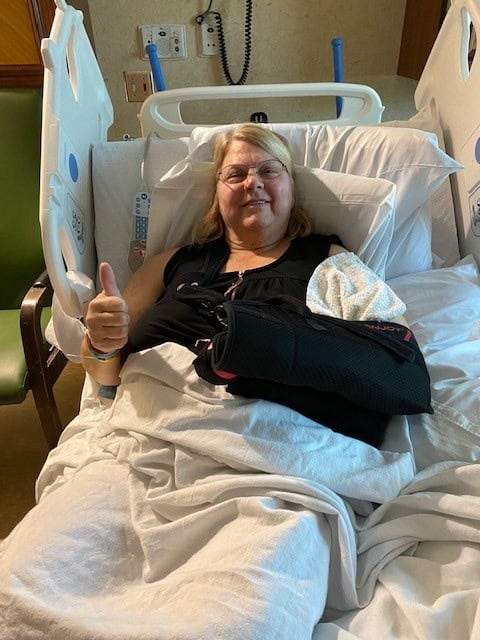
“After several hours, the doctor came in and told me my humerus bone was broken and surgery would be needed,” she said. “He noted there was deterioration in the bone and recommended I transfer to another hospital better equipped to handle my injury.”
An ambulance took her to the larger hospital, where another doctor reviewed her scans. He brought unfortunate news.
“He told me the broken bone was going to have to be removed and that the closest hospital that could handle that surgery was in Tampa, which was two hours away,” she said. “I told them absolutely not – I wasn’t going anywhere but back home to my own doctors.”
Once Linda’s pain was under control and it was safe for her to travel, the hospital released her to return home to Memphis. While waiting for her flight, she received a call from her doctor with the results of the PET scan.
Metastatic Breast Cancer: The News She Saw Coming
“She told me I had metastatic breast cancer, and it had spread to my bones,” Linda said. “After all I had been through over the weekend, it was just confirmation of what I already knew.”
Then came another shocking blow. “The deterioration was all the way up to my shoulder and all the way through the bone,” she said. “The only way to treat it effectively was to undergo a reverse shoulder replacement and replace the bone that had deteriorated.”
Moving Forward After Post-Surgery Complications
The surgery was successful, and Linda recovered at home for the next eight weeks. Her oncologist also started treatment with Letrozole (a hormone therapy) and Verzenio (a CDK4/6 inhibitor).
During her recovery from surgery, she dislocated her shoulder twice. “My doctor gave me two options,” she said. “I could either start physical therapy and work to strengthen my muscles, or I would need additional surgery to prevent future dislocation.”
Feeling Better With Physical Therapy
Linda chose the less invasive option of physical therapy. Her first session was in August of 2024, and she soon noticed a big difference in how she felt. “There were days that my joints ached everywhere, but I quickly realized that on days I missed therapy, I felt tired and sore,” she said. “The more I sat, the worse I felt, but I always felt better when I exercised.”
Investigating the Benefits of Exercise in MBC Treatment
Breast cancer researchers have noted the benefits of exercise in people with early-stage breast cancer. Through the Exercise in Metastatic Breast Cancer (EMBody) clinical trial, Komen-funded researcher and principal investigator Tarah Ballinger, M.D. is investigating whether including exercise with standard treatment could improve quality of life for people with MBC.
“We’re specifically focusing on women who have indolent metastatic breast cancer, with the idea that these women may be poised to have the same impact of exercise on their outcomes as women who have early-stage breast cancer,” Dr. Ballinger said.
Motivated to Keep Moving
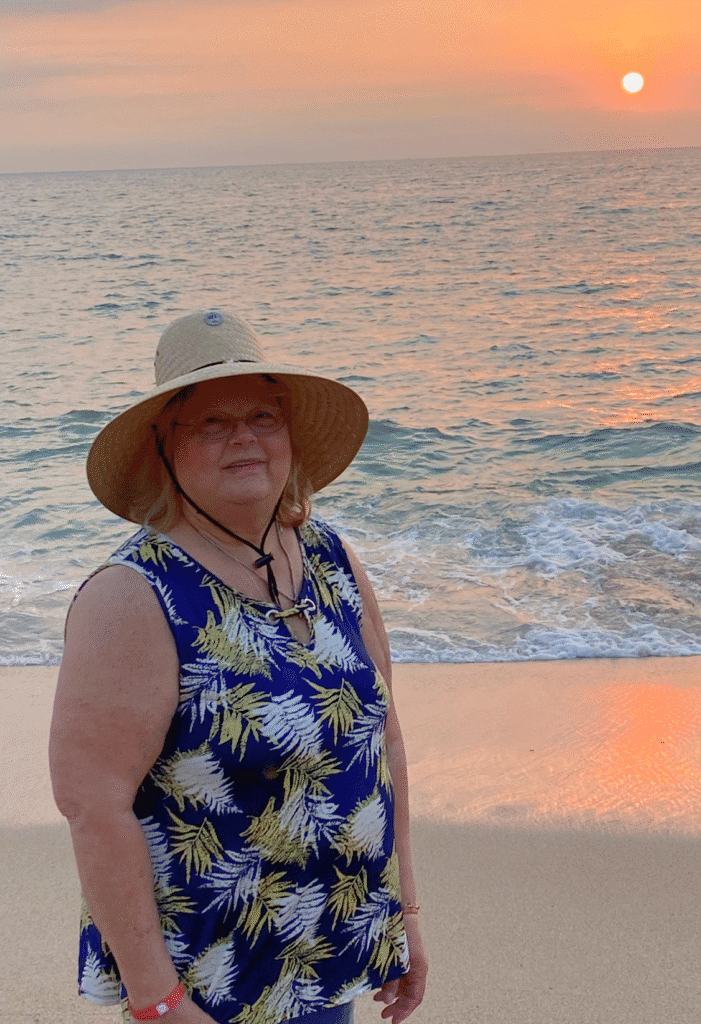
Based on her personal experience, Linda is a firm believer in the benefits of including exercise in your routine while receiving treatment. “Physical therapy kept me motivated to keep moving,” she said. “It’s hard to be motivated when you feel awful, but exercise is something that is so beneficial for your mind and body.”
Although she has completed physical therapy, Linda plans to join her local YMCA to keep active. “I have a friend who is going to be my accountability partner,” she said. “I’m hoping to sign up for tai chi and some group exercise classes.”
Now a year into treatment, Linda has also received positive results from her current treatment regimen. “My scans show the tumor hasn’t grown,” she said. “There’s also some scarring on the bone, which means they are healing.”
Additionally, Linda receives infusions every two months to strengthen her bones and prevent additional fractures. “I am just taking the journey day by day and hopefully, my treatment will continue to have a positive outcome.”
Statements and opinions expressed are that of the individual and do not express the views or opinions of Susan G. Komen. This information is being provided for educational purposes only and is not to be construed as medical advice. Persons with breast cancer should consult their health care provider with specific questions or concerns about their treatment.