
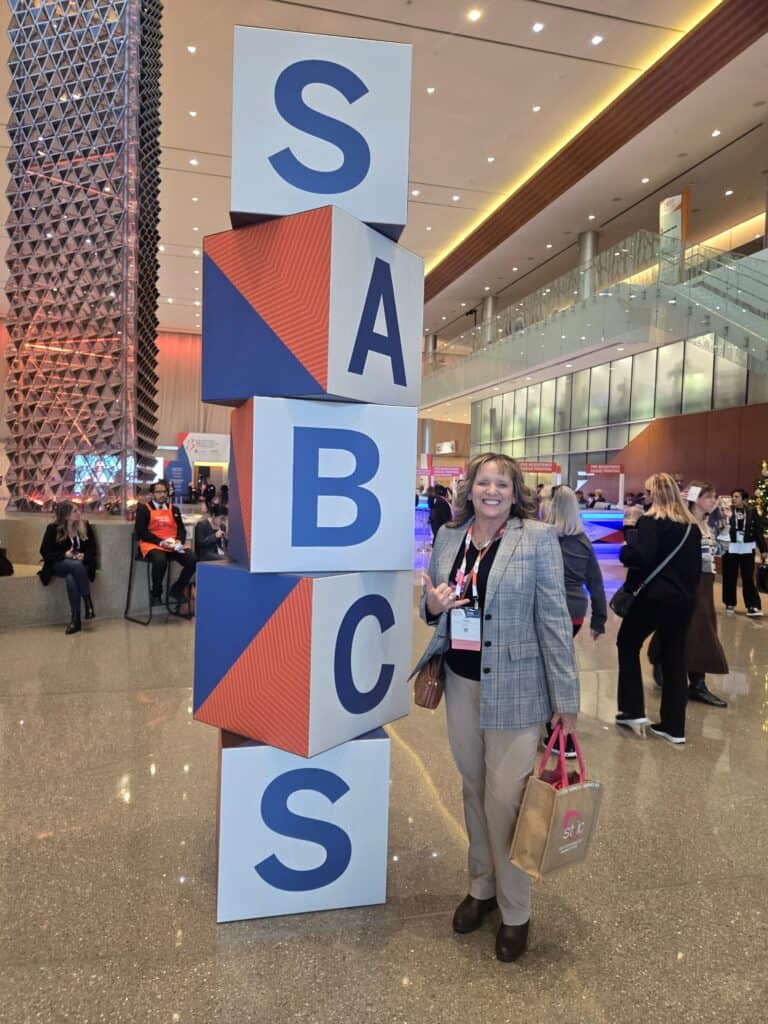
When patient advocates attend major conferences like the San Antonio Breast Cancer Symposium (SABCS), they help shape breast cancer clinical trials by sharing what patients really experience and need when it comes to research. They also help to translate complex science into clear, understandable information that helps patients make informed choices. That’s why patient advocate involvement is so important for improving clinical trials for patients.
In this installment of Spotlight on Clinical Trials, we explore just a few of the many ways that advocates help shape clinical trials and make a meaningful difference for people in the breast cancer community.
Ensuring Clinical Trials Stay Patient-Focused
Patient advocates play a vital role in ensuring clinical trials stay focused on what patients need. By discussing their personal experiences at conferences like SABCS, they make sure the real needs of patients, like quality of life, stay front and center as new studies are being developed. For patient advocate Barbara Segarra-Vazquez, who lives in Puerto Rico, these discussions are opportunities to ensure clinical trials are accessible to diverse communities like her own.
“We [advocates] shape clinical trials,” she explains. “We ask if it’s accessible to Spanish speakers, or if a person with three jobs and no paid sick days can realistically participate.”
Segarra-Vazquez is a Komen Advocate in Science and has been a patient advocate since her initial diagnosis in 2003. At this year’s SABCS, she participated in a session called “Partnership for Progress,” where she joined others in discussing the vital role patient advocates play in advancing science, especially within the Latino community.
“We need Latino advocates,” Segarra-Vazquez observes. “Twenty percent of the U.S. population is Latino. We must be in the room and part of the conversation.”
Translating Complex Science for Patients
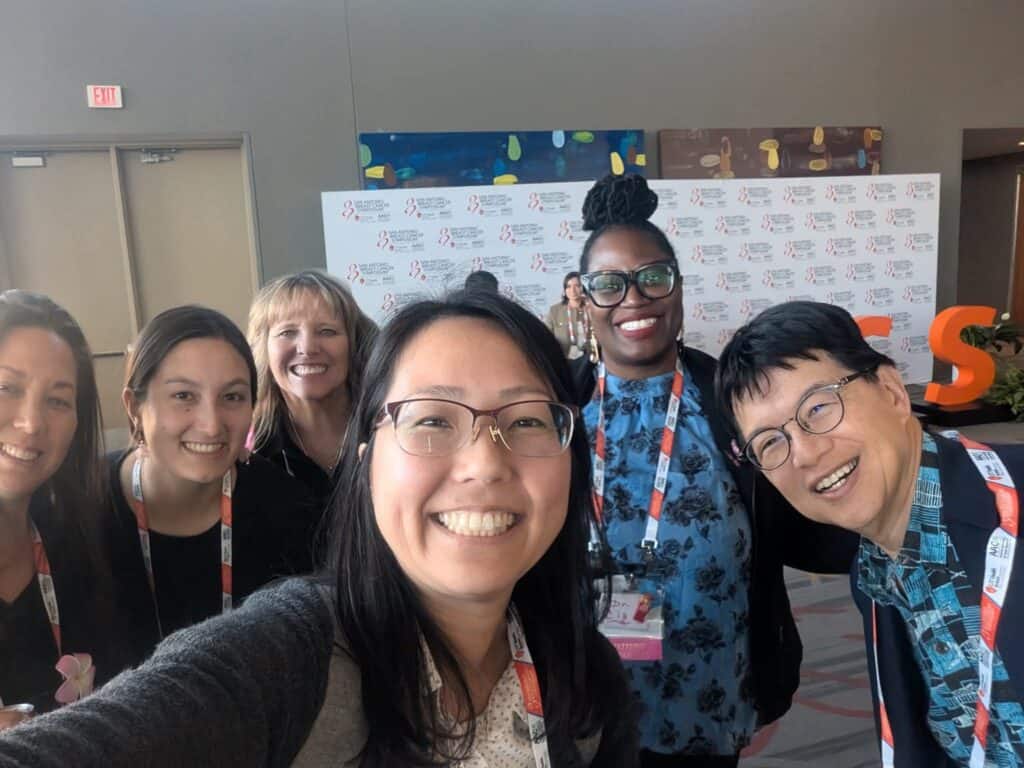
Patient advocates also turn clinical trial results into information that patients can understand and use. International conferences like SABCS provide a forum for exciting research breakthroughs and updates on recent clinical trials. Patient advocates make it a priority to stay on top of the latest findings in these studies, especially those that have the potential to become practice-changing.
This year at SABCS, patient advocate Bob Riter attended presentations that covered several hot research topics, including a possible connection between inflammation and breast cancer. “There’s been some research that suggests that those who had COVID had an increase in likelihood of their breast cancer recurring,” he explains.
Other sessions Riter attended focused on trending research topics like liquid biopsies and artificial intelligence (AI), all of which he described as “exciting, but also a lot to take in.” Aside from being a survivor of breast cancer and prostate cancer, Riter is also part of several advocacy groups including Komen Advocates in Science, the Advocates for Collaborative Education (ACE) and the Male Breast Cancer Global Alliance.
“I think that breast cancer research is phenomenal — that what we know today surpasses what we knew even a few years ago,” he says.
Creating More Seats at the Research Table
By attending conferences like SABCS, patient advocates bring their unique experiences, questions and concerns directly to researchers, ultimately helping guide the direction of clinical trials and other areas of research areas. Their presence ensures that patients aren’t just observers, but active participants in decisions that affect their care and quality of life.
As patient advocate Jane Perlmutter observes, patient advocates have not always had a seat at the research table. “Research used to include advocates grudgingly,” she recalls. “Now, forward-looking researchers engage us early and often, and it makes a huge difference.”
Patient advocates have taken an increasingly prominent role at meetings like SABCS, as they bring their insight and expertise to many research discussion panels. “Advocates were on every session panel this year, and some made a real impact with their voices” Perlmutter says.
“It’s so important to always have advocates involved,” Riter echoes. “We get to ask, ‘Where is this going?’ Even if the researchers don’t know, they need to think about it.”
Turning Research into Hope for Patients
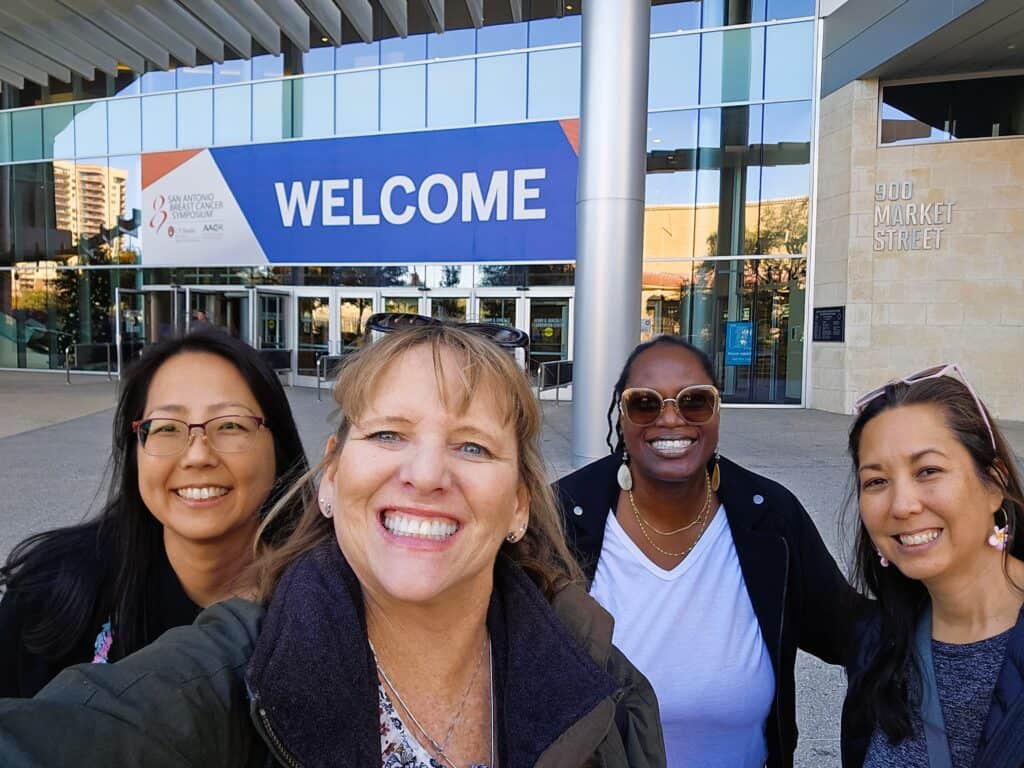
Patient advocates help turn research findings into a source of real hope for members of the breast cancer community. By going to conferences like SABCS, they can learn more about the latest clinical trials and then explain what they mean to patients in a way they can understand. For people living with metastatic breast cancer (MBC), some trials offer better treatments that can help them live longer, feel better and/or have more options when a treatment stops working.
Through her own experience of living with MBC, patient advocate Julia Hughes knows firsthand how clinical trials in the research pipeline can inspire hope within the MBC community. Hughes is also a member of Komen’s MBC Steering Committee, a group comprised solely of people living with MBC who seek to elevate the voices and meet the unique needs of this community.
“Science gives us alternatives. Science gives us hope. And that’s why we do what we do as advocates.”
Patient advocate Barbara Segarra-Vazquez
Hughes, who lives in Hawaii, describes SABCS as “overwhelming in the best way,” and plans to share what she learned there with others. “I want to be the messenger,” she explains. “I want to bring back hope and knowledge to the people of Hawaii, and beyond.”
“Research is hope,” Segarra-Vazquez says. “Metastatic disease remains incurable, yet many people are living far longer than they once could have, and that is because of science.”
Thanks to the tireless work of patient advocates working together with breast cancer researchers, there are new doors opening that could lead to better outcomes, and a more hopeful future.
If you’d like to learn more about breast cancer research, visit the Emerging Areas in Research on Breast Cancer Treatment page in the About Breast Cancer section of komen.org and navigate to your area of interest.