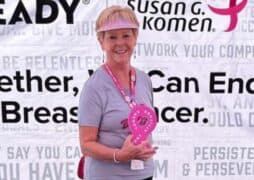
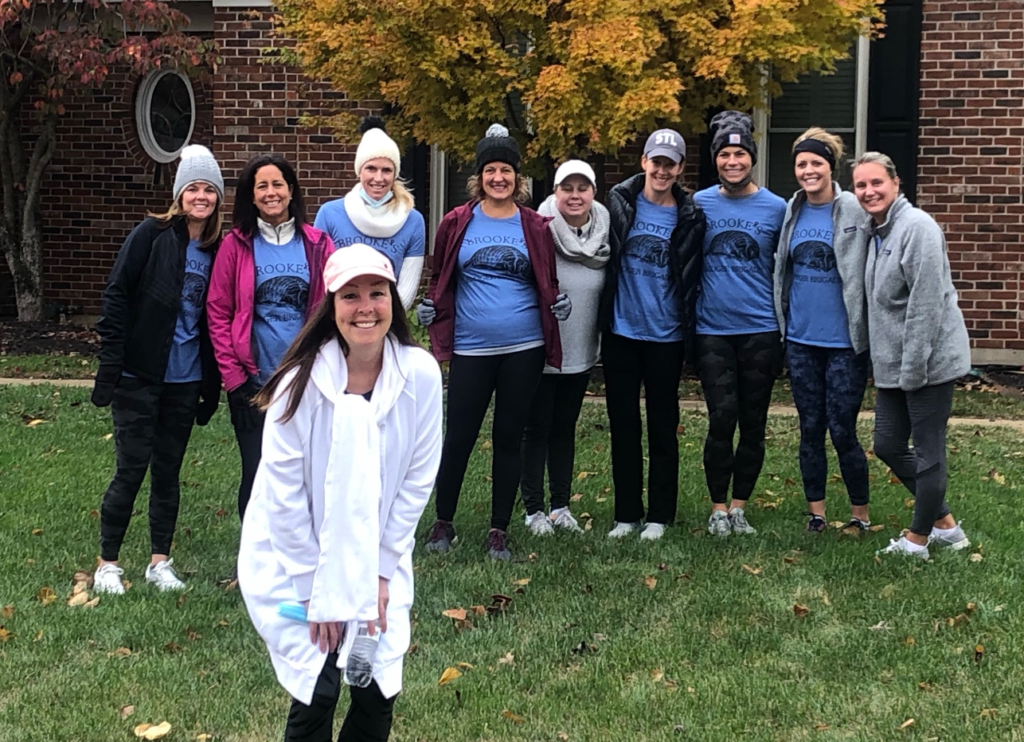
In her role as a wealth management advisor, Brooke Hunady understands the importance of planning for the unexpected. After receiving a breast cancer diagnosis despite years of routine screenings, she chose to turn her experience into action by participating in VIPink, Komen’s ambassador fundraising program, rallying her network of friends, family and colleagues to help fuel the fight to end breast cancer.
An Unexpected Diagnosis
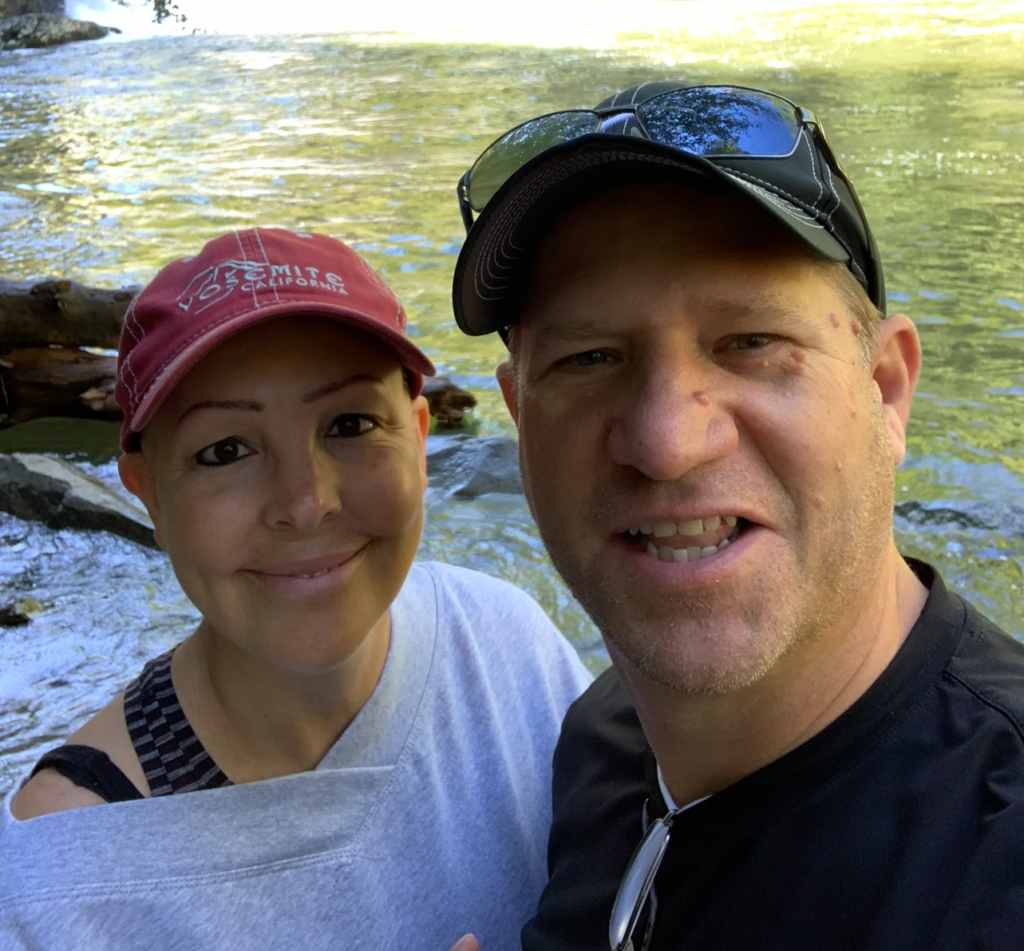
Brooke was on vacation with her family in Florida when she first noticed an abnormality in her breast. Initially, she wasn’t too concerned. She had no family history of breast cancer, and her mammogram results were normal just six months earlier. However, that all changed a few weeks after she returned home to St. Louis.
“The texture of the lump suddenly changed and felt as hard as a rock,” she said. “I remember telling my husband, ‘I don’t think this is good.’”
Brooke made an appointment for a diagnostic mammogram and was referred for a breast ultrasound. As she watched the radiologist review the images, she knew something was wrong. “I asked her, ‘how big is it?’” Brooke said. “She told me it was about four centimeters.”
A biopsy confirmed her fear – it was breast cancer.
Understanding Breast Density
During her very first mammogram four years earlier, Brooke learned she had dense breasts.
Breast density is a mammographic finding that describes the proportion of fibrous and connective tissue relative to fatty tissue in the breast. Women with very dense breasts are 4-5 times more likely to be diagnosed with breast cancer, as dense tissue may hide small masses and make it harder to find breast cancer on a mammogram.
While mammograms are the gold standard when it comes to breast cancer screening, they are less effective in women with dense breasts. Often, women with dense breasts may require additional imaging after a mammogram.
Because of Brooke’s dense breast tissue, her doctor referred her to a radiologist for an ultrasound following her first mammogram, which came back normal. When she asked if she should continue getting ultrasounds, her doctor told her it was unnecessary.
Navigating Breast Cancer Treatment During the Pandemic
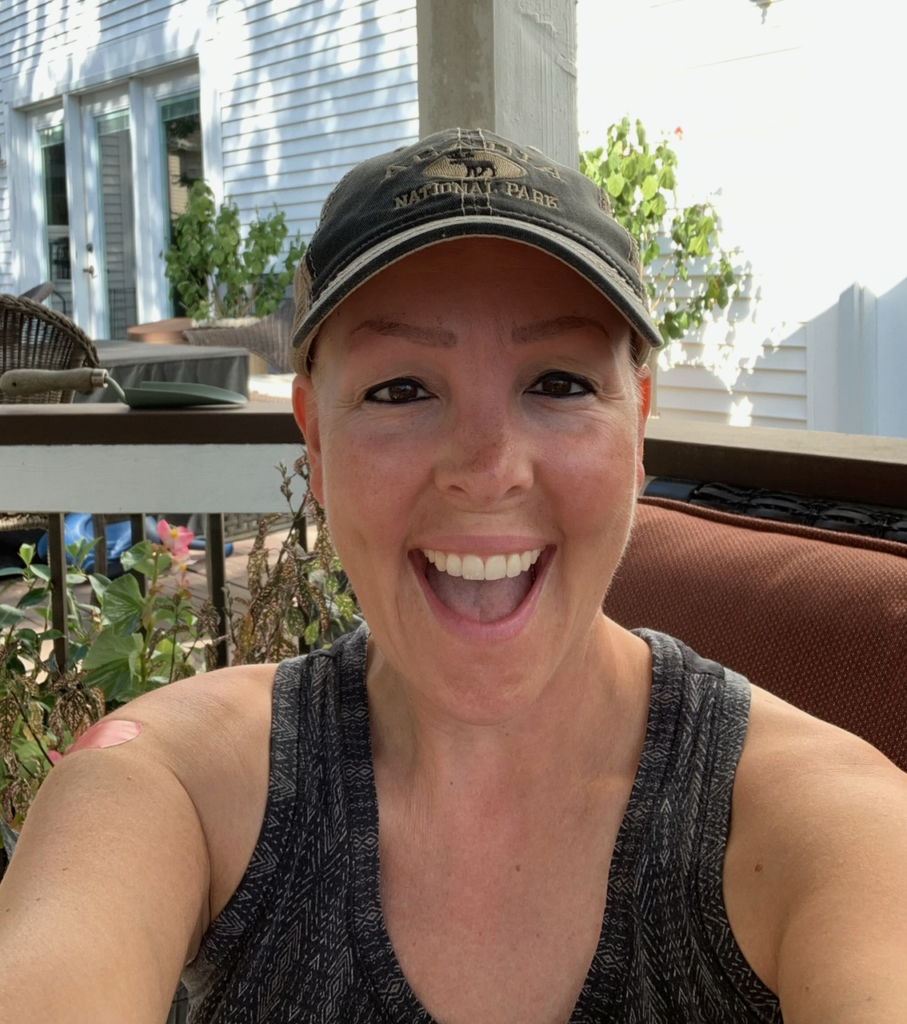
Brooke learned her cancer was stage 3, hormone receptor-positive (HR-positive) and had spread to her lymph nodes. Her treatment plan included a double mastectomy followed by six months of chemotherapy and five weeks of daily radiation therapy.
“Treatment was difficult because during the pandemic, you couldn’t have a support person with you,” she said. “Everyone was socially isolated, but I was blessed to be able to come home and be with my family.”
Prior to her diagnosis, Brooke’s knowledge of breast cancer was limited. She was shocked to learn that one in eight women in the U.S. will be diagnosed with breast cancer in their lifetime.
“My girlfriends set up a social distancing get together in our church parking lot,” she said. “There were about 15 of us, and I remember thinking, ‘there’s going to be another one of us.’ That time came a few years later, when my friend Lois was diagnosed.”
Joining the VIPink Ambassador Fundraising Program
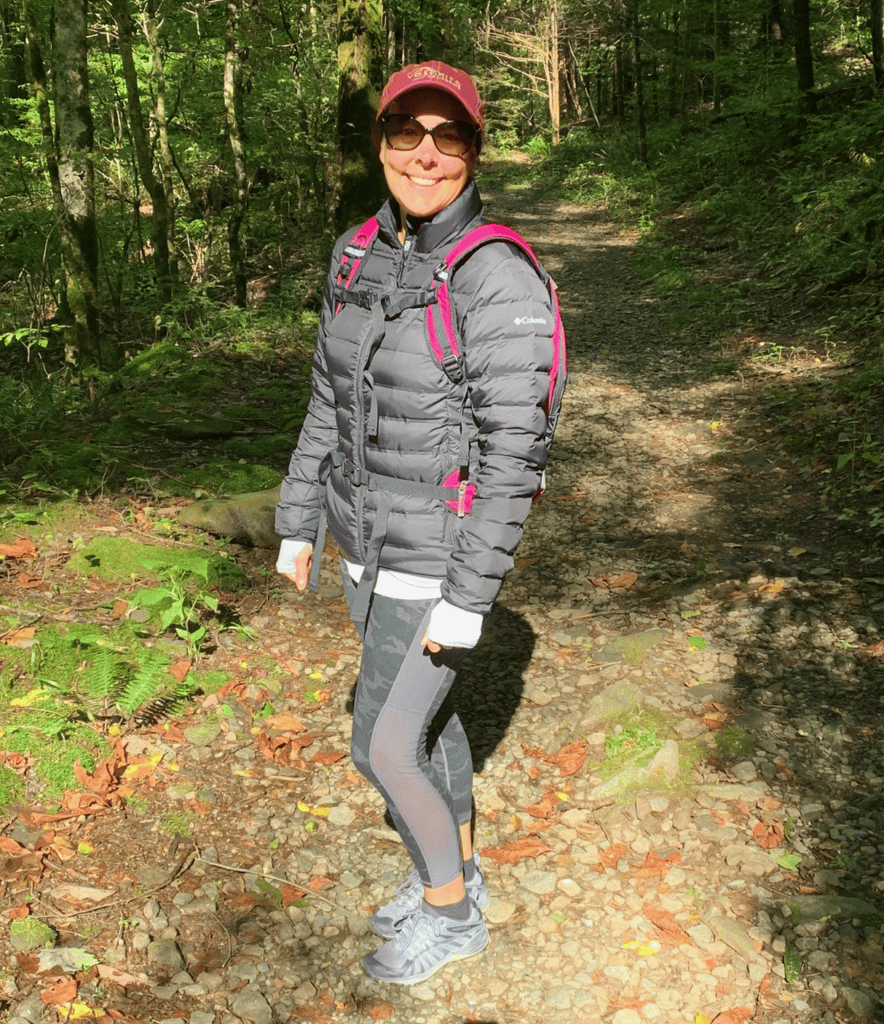
In the years following her experience with breast cancer, Brooke was asked to join the local Komen board of directors. At the time, she was president of the board of directors for the Saint Andrews Charitable Foundation and did not have the bandwidth to dedicate to volunteer leadership with another organization. However, as a survivor, she was interested in other ways she could support Komen and help other women experiencing breast cancer.
“When your hair grows back, everyone thinks you’re back to normal,” Brooke said. “In some regards, you’re worse because you have anxiety about it coming back. It’s a big part of the breast cancer journey, and I want to be an advocate for women going through it.”
Brooke signed up to participate in VIPink, Komen’s ambassador fundraising program that provides executives, advocates and community leaders nationwide the flexibility to choose how they fundraise for Komen.
Ambassador Fundraising as a Komen BigWig
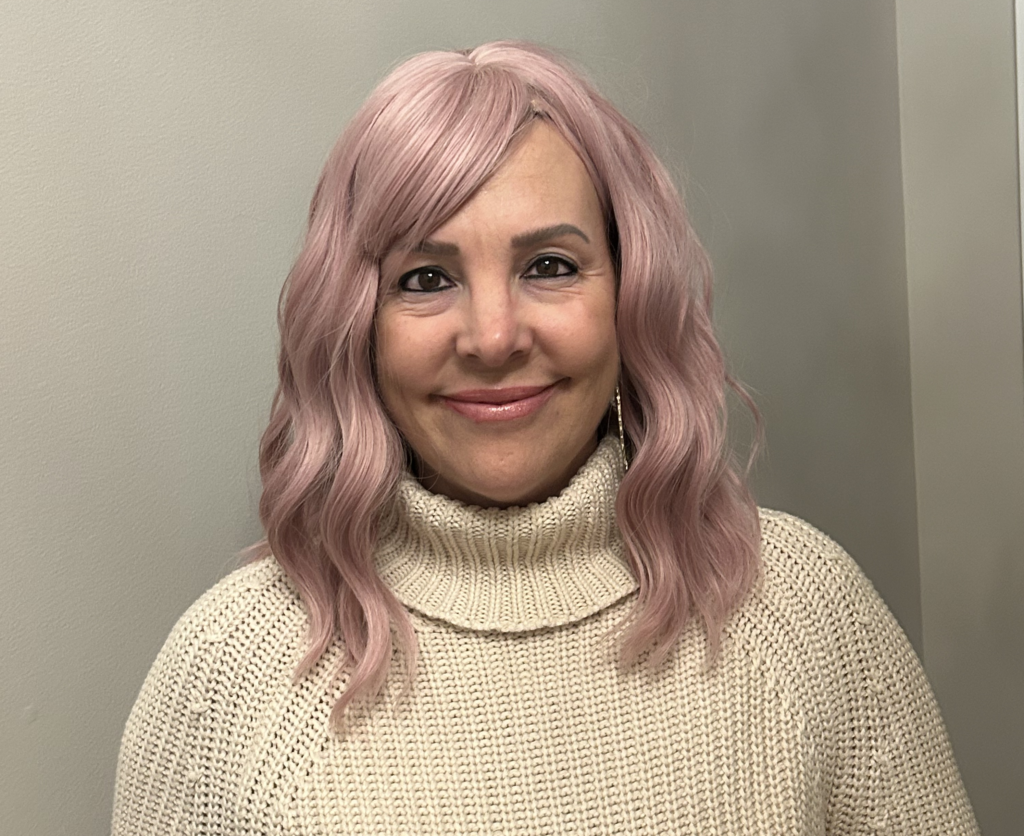
Brooke chose to fundraise through her the Komen Heartland VIPink BigWigs campaign. BigWigs ambassadors commit to raise a minimum of $5,000 while wearing a fun, attention-grabbing pink wig. At the conclusion of the campaign, the ambassador who raises the most money earns the title of Biggest Wig.
Brooke utilized a grassroots approach to fundraising, offering incentives to friends, family, co-workers and clients who donated.
“I offered to make pancakes with strawberries and white chocolate for anyone who donated at least $25,” she said. “I wore the wig while I presented at one of my company’s partner meetings, and I received such phenomenal support.”
Friendly Competition Drives Fundraising Success
Brooke’s competitive spirit led to a friendly rivalry with fellow BigWigs ambassador Jim Morrison. They were neck-and-neck for Biggest Wig throughout the duration of the campaign. “I was watching the leaderboard and anytime he passed me, I would send him an email telling him he was doing great, but that I had to win,” she said. “It drove results for a wonderful cause.”
Collectively, Brooke and Jim raised more than $40,000 during the Heartland BigWigs campaign. By the end of the campaign, Brooke’s fundraising brought in more than $22,000, earning her the title of Biggest Wig. Additionally, she was recognized among the top 10 VIPink ambassador fundraisers nationwide.
“I feel incredibly grateful to everyone who donated,” Brooke said. “Participating in VIPink energized me to continue to spread the word about all the good work Komen does for the breast cancer community.”
How to Become a VIPink Ambassador
With the VIPink ambassador fundraising program, community leaders across the U.S. have more flexibility to choose how to engage and raise funds to help end breast cancer. Whether participating through Pink Tie Guys, BigWigs or a custom campaign, VIPink offers a unique opportunity for leaders to make a lasting impact.
For more information on how you can make a difference through VIPink, email fundraise@komen.org or visit komen.org/VIPink.
Statements and opinions expressed are those of the individual and do not express the views or opinions of Susan G. Komen. This information is being provided for educational purposes only and is not to be construed as medical advice. Persons with breast cancer should consult their health care provider with specific questions or concerns about their treatment.