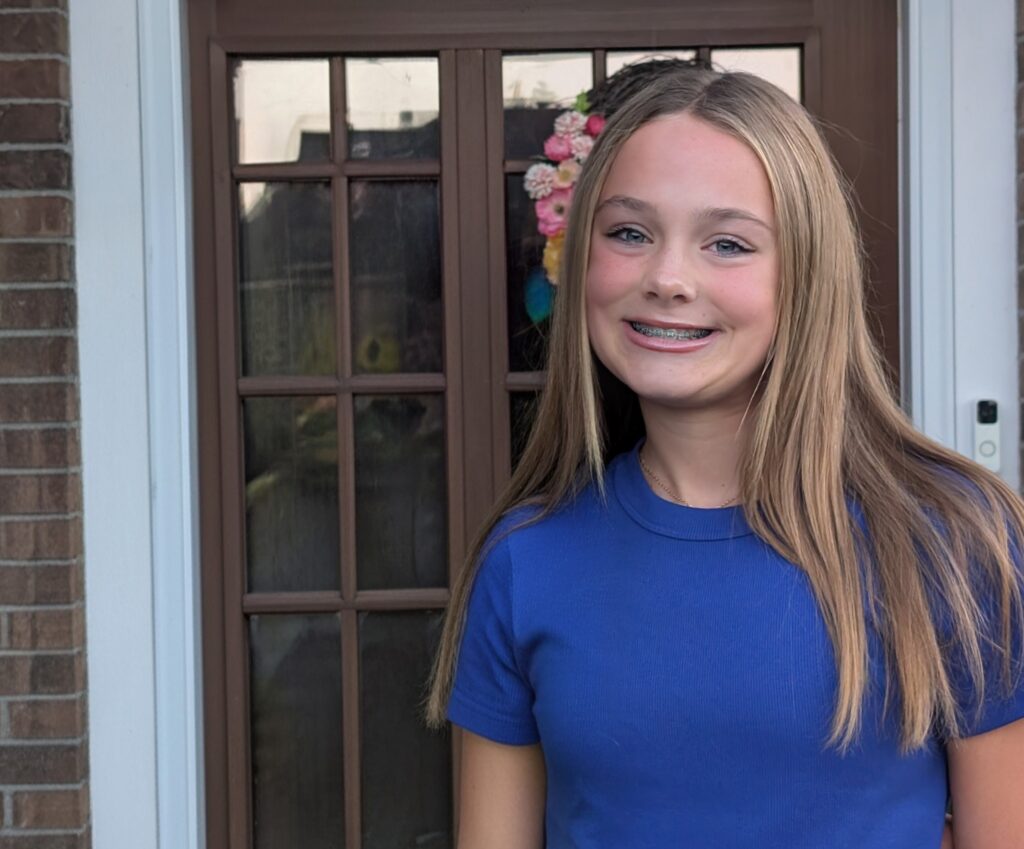
When Ava was nominated to participate in the Benjamin Project, she was given a simple directive: take $100 and make a difference. While some classmates chose to donate supplies to teachers or local nonprofits, Ava saw an opportunity to take her impact even further as a youth breast cancer fundraiser.
The Benjamin Project is a student-led community service program that challenges middle schoolers to turn a small investment into meaningful impact. Participants are nominated by educators and are given $100 and 90 days to make a difference in their community.
For Ava, the chance to do good aligned with her desire to honor two of the most important women in her life – her grandmas.
“Both of my grandmas are breast cancer survivors,” Ava said. “I decided to use the money to buy bracelets, sell them and donate the money to Komen.”
A Family Connection to Komen
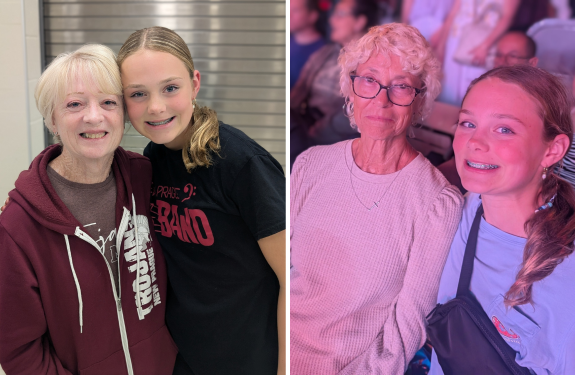
Ava is no stranger to Komen. Her paternal grandmother, Pattie, was first diagnosed with breast cancer 25 years ago, and Ava’s family regularly attended their local Race for the Cure. In 2020, Pattie received a second breast cancer diagnosis. Just a few years later, her maternal grandmother, Audrey, also received a breast cancer diagnosis.
“They are my role models,” Ava said. “If I’m struggling with something, they always understand and listen. When they had breast cancer, I could see them struggling and going through so much, so it means a lot to me to be able to do this for them.”
Selling Bracelets to Support Komen
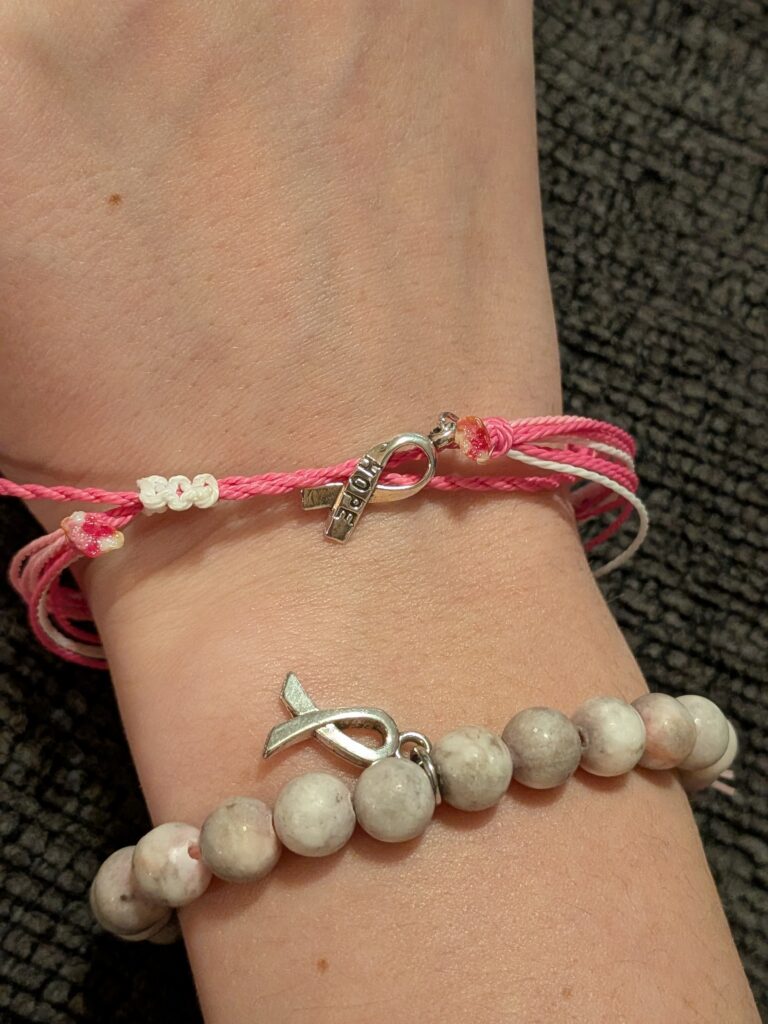
Ava sold two bracelet options as part of her youth breast cancer fundraiser – a simple string bracelet for $3 and a beaded bracelet priced at $10. “I chose bracelets because men and women can both wear them,” she said. “A bracelet can always be with you where you can see it every day.”
When Ava’s father, Rick, learned his youngest daughter was one of three eighth graders chosen to participate in the project, he was pleasantly surprised. “I’m the assistant principal at her school, but I had no idea her teacher nominated her,” he said. “It came out of the blue and caught me off guard in a very positive way.”
Ava utilized social media to promote her bracelet sales, sharing information on Facebook and Snapchat. She also made flyers, which she then posted throughout the school. “She generated all of this on her own with minimal help from me and her mom,” Rick said. “We collected virtual payments and helped her set up a spreadsheet, which she used to track her sales.”
Making a Lasting Impact
By the time her 90-day campaign ended, Ava turned $100 into $500 for Komen. Her parents couldn’t be prouder of her.
“She understands that breast cancer is something very rooted in our lives,” Rick said. “To see her take initiative like this – especially at her age – means everything.”
Statements and opinions expressed are those of the individual and do not express the views or opinions of Susan G. Komen. This information is being provided for educational purposes only and is not to be construed as medical advice. Persons with breast cancer should consult their health care provider with specific questions or concerns about their treatment.