Clinical trials are at the heart of every breakthrough and practice-changing treatment in breast cancer, but their importance goes beyond the scientific advancements. Behind every clinical trial is a person who is hoping for better options that could mean a longer and better quality of life. Clinical trials have the power to turn these hopes into possibilities.

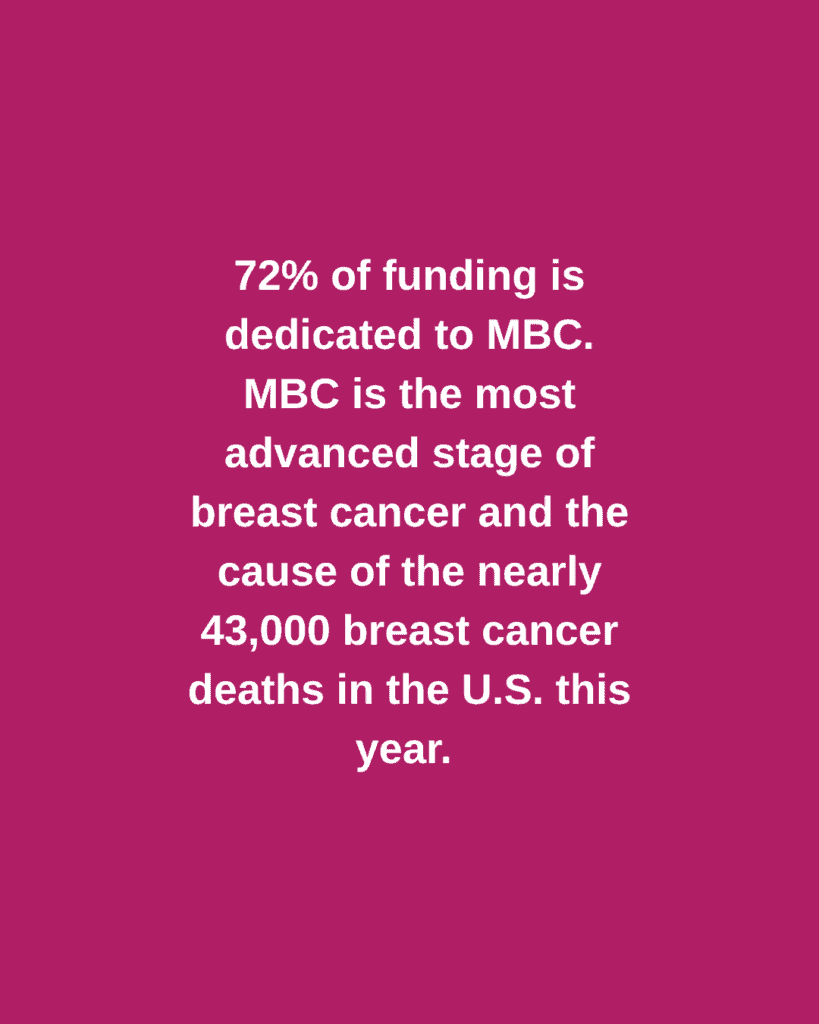
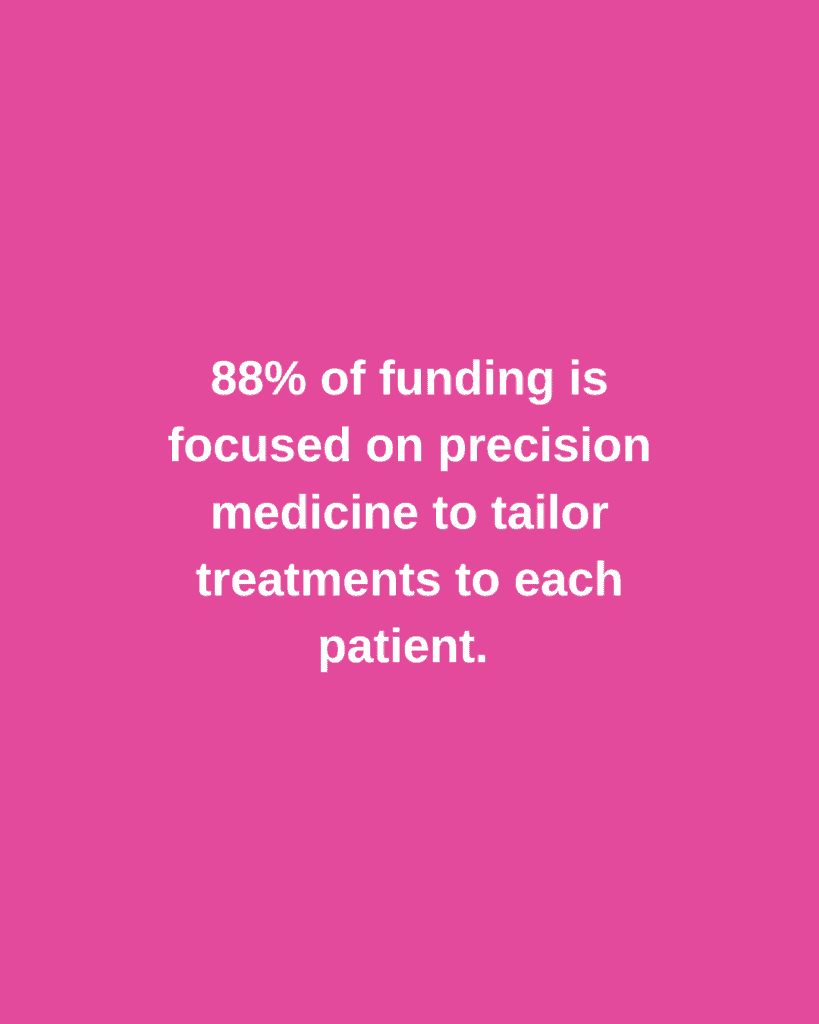
This past year alone, Komen provided more than $15 million to research and clinical trials that aim to save lives and improve outcomes in the breast cancer community. These studies are investigating topics like new breakthroughs in AI and vaccine development, as well as our most critical research priorities: metastatic breast cancer (MBC) and aggressive breast cancers, like triple negative breast cancer (TNBC), advancing personalized breast care and eliminating breast cancer disparities and inequities.
Here are three fundamental research questions that Komen-funded clinical trials hope to answer.
Question #1: Can new ways of treating MBC and TNBC prevent recurrence or save lives?
- Targeting a hard-to-treat subtype of TNBC
Komen Chief Scientific Advisor Jennifer Pietenpol, Ph.D., is exploring a better way to target and treat a subtype of TNBC called luminal androgen receptor (LAR) TNBC. Her goal is to find new treatments that are tailored to LAR, since this subtype of TNBC doesn’t respond well to immunotherapy.
- Improving outcomes for patients with MBC through a new targeted drug combination
Can the antibody-drug conjugate (ADC) sacituzumab govitecan (SG), combined with immunotherapy, be more effective in activating tumor immune cells than SG alone for those with metastatic TNBC? Through this clinical trial, Komen Scholar Sara Tolaney, M.D., M.P.H., is hoping to identify the unique biomarkers that will predict which patients will benefit from this treatment.
- Identifying better therapies for tumors that have spread to the brain and spinal cord
Through this clinical trial, Komen Scholar Nancy Lin, M.D., is using patient samples to find new treatment targets for people with metastatic breast cancer that has spread to the brain and spinal fluid. The goal of this study is to develop better targeted therapies and improve outcomes for these patients.
Question #2: Can a better understanding of genetics help reduce disparities in outcomes?
- Uncovering Genetic Risk Factors for TNBC in Women with African Ancestry
Can ancestry, particularly African ancestry, contribute to the genetic risk of developing TNBC? Through this study, Komen Scientific Advisory Board Member Lisa Newman, M.D., M.P.H., will identify immune cells and immune biomarkers in TNBC that can better define TNBC subtypes in diverse populations. The goal of this clinical trial is to alleviate breast cancer disparities by pinpointing the root causes of TNBC in specific populations.
- Using AI-Assisted Navigation to Mitigate Disparities in Genetic Testing for Breast Cancer
Genetic testing is a reliable method for assessing the risk of hereditary breast cancer, especially among Black patients. Through this clinical trial, Komen Scholar Tracy Battaglia, M.D., M.P.H., is using AI to identify eligible individuals who should receive genetic testing. Dr. Battaglia and her team will measure how well AI-assisted navigation increases the rates of genetic testing in this group.
- Reducing Breast Cancer Disparities through Genetic Counseling and Testing
Through her study, Komen Scholar Tuya Pal, M.D., is providing web-based genetic counseling to approximately 100 young Black women with breast cancer, aiming to increase genetic testing to inform their families. She will also analyze medical records and research genetic drivers of hereditary cancer. The goal of this clinical trial is to reduce disparities in breast cancer outcomes through improved understanding of inherited genetic mutations.
Question #3: Can doctors choose better treatments based on each tumor’s unique biology?
- Personalizing Radiation Therapy to Improve Outcomes in a Diverse Breast Cancer Community
Komen Scholar Reshma Jagsi, M.D., D.Phil., is investigating how radiation therapy combined with drug treatment or surgery can be personalized using biomarkers to optimize patient response. The goal of this project is to use several clinical trials and research data to better understand how to personalize this combination therapy to improve breast cancer outcomes, treatment experience and quality of life for breast cancer patients from all racial backgrounds.
- Using Liquid Biopsy to Make Personalized, Real-Time Treatment Decisions
Through this clinical trial, Komen Scholar alum Ian Krop, M.D., Ph.D., is using a liquid biopsy to see how patients with HER2+ breast cancer respond to ADC trastuzumab deruxtecan (T-DXd). The goal is to find ways to personalize treatment in real time, instead of treating all patients the same, which could prevent unwanted side effects and improve outcomes.
- Empowering Patients with Tools to Make the Best Decisions for Screening and Treatment
In this clinical trial, Komen Scholar alum Susan Domchek, M.D., is investigating new strategies to help women with BRCA1 and BRCA2 mutations make informed decisions about breast cancer screening and risk-reducing surgery. The goal of this study is to empower people with new advances in genetic testing to help them make the best decisions for their breast care.
Why Clinical Trials Matter
Behind every clinical trial are people waiting for better answers and better treatment options. By finding new ways to treat aggressive tumors, alleviating breast cancer disparities and personalizing care, through clinical trials, researchers are creating a future where a patient’s diagnosis doesn’t define how long or how well they live. Clinical trials are a fast track that brings new options from the lab to the clinic. And most importantly, every clinical trial builds upon the discoveries that came before it, and every step forward brings us closer to a world where no one dies of breast cancer.
Did you know?
In the past year alone, Komen has invested $15.4 million in research, including 36 grants and 12 clinical trials. Over 40% of this research is focused on treatment.