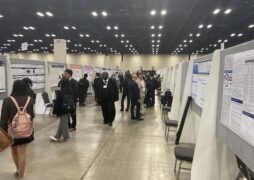
The 2025 ASCO Annual Meeting highlighted several groundbreaking developments across the landscape of breast cancer research, from early detection to cutting-edge treatments. These advances offer hope to individuals diagnosed at every stage of breast cancer, from early-stage disease to metastatic breast cancer (MBC).
In this episode of Breast Cancer Breakthroughs, we speak with Dawn Hershman, M.D., M.S., F.A.S.C.O., medical oncologist at Columbia University, who shares the early breast cancer studies she is most excited about from this year’s ASCO meeting. We also discuss the biggest news on MBC and encourage viewers who wish to dive deeper into these findings to check out Komen’s MBC Impact Series. Through this event, Komen Advocate in Science member Janice Cowden provides her perspective on what these studies mean for the MBC community.
Moving the Needle for Early Breast Cancer
As Dr. Hershman shares, one exciting area of cancer research is exploring the impacts of diet and exercise on recurrence and long-term survival. Results from the CHALLENGE clinical trial show that regular exercise, like walking or strength training, can help prevent colon cancer from coming back in people who have already been treated for it. Findings from the CHALLENGE trial offer valuable support for breast cancer treatment, as seen in the phase 3 BWEL (Breast Cancer Weight Loss) clinical trial.
The BWEL clinical trial is studying whether lifestyle changes, including diet and exercise, can help reduce the chances of breast cancer coming back in women with early-stage breast cancer who are overweight or obese. Both the BWEL and CHALLENGE studies illustrate the potential of using lifestyle interventions as treatment along with standard medical care. “I think it’s really promising for the whole field of lifestyle modification and cancer, and how we can improve outcomes in the long term,” Dr. Hershman says.
The phase 2 CompassHER2-pCR study is investigating whether people with early HER2-positive (HER2+) breast cancer might be able to safely skip chemotherapy after surgery if their cancer responds well to initial treatment of THP (a combination of chemotherapy, trastuzumab and pertuzumab). Researchers are also testing whether a new genomic test called HER2DX can predict which cancers are likely to go away after the first treatment. So far, these results show a positive step towards more personalized and less aggressive treatments for these patients. “In oncology and the treatment of early-stage breast cancer, we’re always trying to figure out how to get the maximum benefit with the least toxicity,” notes Dr. Hershman.
Finally, in the phase 3 OASIS-4 clinical trial, researchers found a new drug called elinzanetant significantly reduces how often women with early estrogen receptor-positive (ER+) breast cancer experience moderate to severe hot flashes from their hormone therapy. Study participants also find the treatment is relatively well tolerated. Elinzanetant is just one of many options that could make hormone therapy for early ER+ breast cancer more manageable while improving overall quality of life for these patients. And as Dr. Hershman observes, this is just one of many new options coming soon.
Hope on the Horizon for MBC
Researchers at this year’s ASCO meeting also had plenty of good news to share with the MBC community, including three different phase 3 clinical trials that all had positive results. In a recent installment of Komen’s MBC Impact Series, patient advocate Janice Cowden highlights some of the results of these clinical trials and what they could mean for those with MBC and other aggressive breast cancers.
Researchers from the phase 3 VERITAC-2 clinical trial reported a new oral medication called vepdegestrant improved progression-free survival by about three months compared to fulvestrant in people with estrogen receptor-positive (ER+), human epidermal growth factor receptor 2 negative (HER2-) advanced breast cancer who have ESR1 genetic mutations. The study found a very low number of people discontinued this treatment. Vepdegestrant also provides the convenience of an oral medicine in place of a monthly injection required with fulvestrant, which is a major factor in ensuring quality of life. “As metastatic breast cancer patients, we not only want to live longer, but we want to live better lives,” Janice says. “Quality of life is so important.”
Is it possible to detect treatment resistance before it happens? The phase 3 SERENA-6 clinical trial tested whether clues in a patient’s circulating tumor DNA, or ctDNA, can inform treatment decisions before the spread of MBC is detected on a scan. While more data is needed before this approach is put into practice, the initial results were promising. “It was rather validating to see ctDNA actually being used in real-time decision making. It’s something that we as patients have been advocating for,” explains Janice.
Other exciting new developments in treating MBC included phase 3 trials that challenged the first-line standard of care for HER2+ and triple negative breast cancer (TNBC) with antibody-drug conjugates (ADCs). The DESTINY-Breast09 clinical trial found that patients with HER2+ MBC who used the ADC trastuzumab deruxtecan plus pertuzumab as a first-line treatment saw a longer progression-free survival of 40.7 months, versus 26.9 months with the previous standard of care. In TNBC, the phase 3 ASCENT-04 clinical trial showed that treatment of ADC sacituzumab govitecan combined with immune checkpoint inhibitor pembrolizumab delayed cancer progression over three months longer than the current standard of care (chemotherapy plus pembrolizumab).
ASCO is just one of many places where researchers come together to share exciting breakthroughs, encouraging clinical trial results and new treatments that give patients real hope for better outcomes in the future.
“When you look at what’s in the pipeline, what’s to come in the next several years, there’s an incredible number of not only new drugs, but new classes of drugs that are being tested and new combinations,” Janice says. “I think it’s very exciting.”
Sign up to stay informed about future episodes of Breast Cancer Breakthroughs, where we will delve into the most exciting advances in breast cancer treatment and technology coming soon for patients.
If you’d like more information about choosing a clinical trial, BreastCancerTrials.org, in collaboration with Susan G. Komen®, offers a custom matching service to help find clinical trials that fit your needs.
Breast Cancer Breakthroughs is possible thanks to our series sponsors: