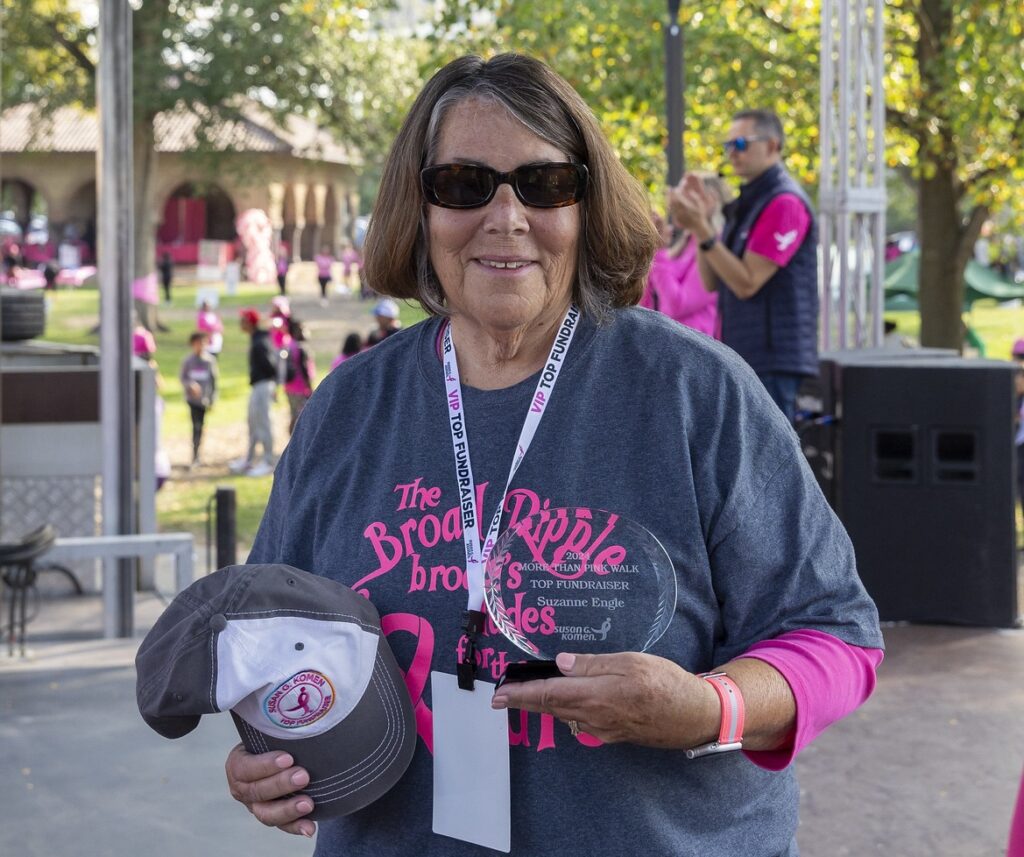
In Part 1 of Suzanne’s story, she shares her experiences with breast cancer and how advances in researches shaped her care. In Part 2, learn how she turned that experience into nearly two decades of fundraising and volunteerism.
After completing treatment for breast cancer, Suzanne knew she wanted to give back by fundraising for Komen. That commitment introduced her to a community that would become an important part of her life.
Now, 20 years later, Suzanne and her MORE THAN PINK Walk team – Broad Ripple Broads for the Cure – have raised more than $470,000 bu turning creative breast cancer fundraising ideas into fun community traditions.
Finding Creative Ideas to Fundraise for Breast Cancer
After signing up for the Walk in 2006, Suzanne reached out to friends and family for donations.
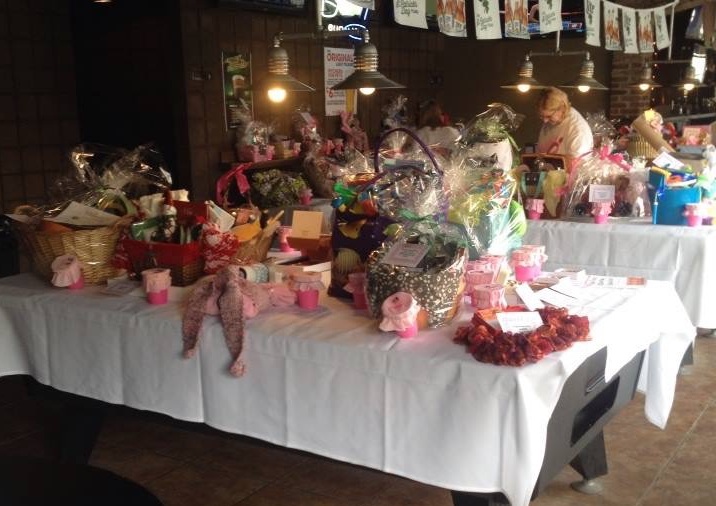
“I sent all my emails and didn’t get any responses,” she said. “I thought that was pretty bad, but it turned out that my friends were already planning our first fundraiser.”
That breast cancer fundraising event was a gift basket raffle held at a local bar in their community of Broad Ripple – a suburb of Indianapolis. The inaugural event consisted of 10-12 themed baskets with donations from local businesses. They raised nearly $2,000.
“We’d ask people for donations for the baskets, and then we’d meet and put them all together,” Suzanne said. “It was at this time that we came up with our team’s name – the Broad Ripple Broads.”
The Broad Ripple Broads for the Cure started with just seven or eight members. Now, there are nearly 20, five of whom are breast cancer survivors.
Suzanne was surprised at the positive response from the community. As the years went on, the basket fundraiser grew to include more than 100 baskets and, on average, raised up to $20,000 each year to support the team’s fundraising efforts.
The Double D Derby: A New Fundraising Tradition
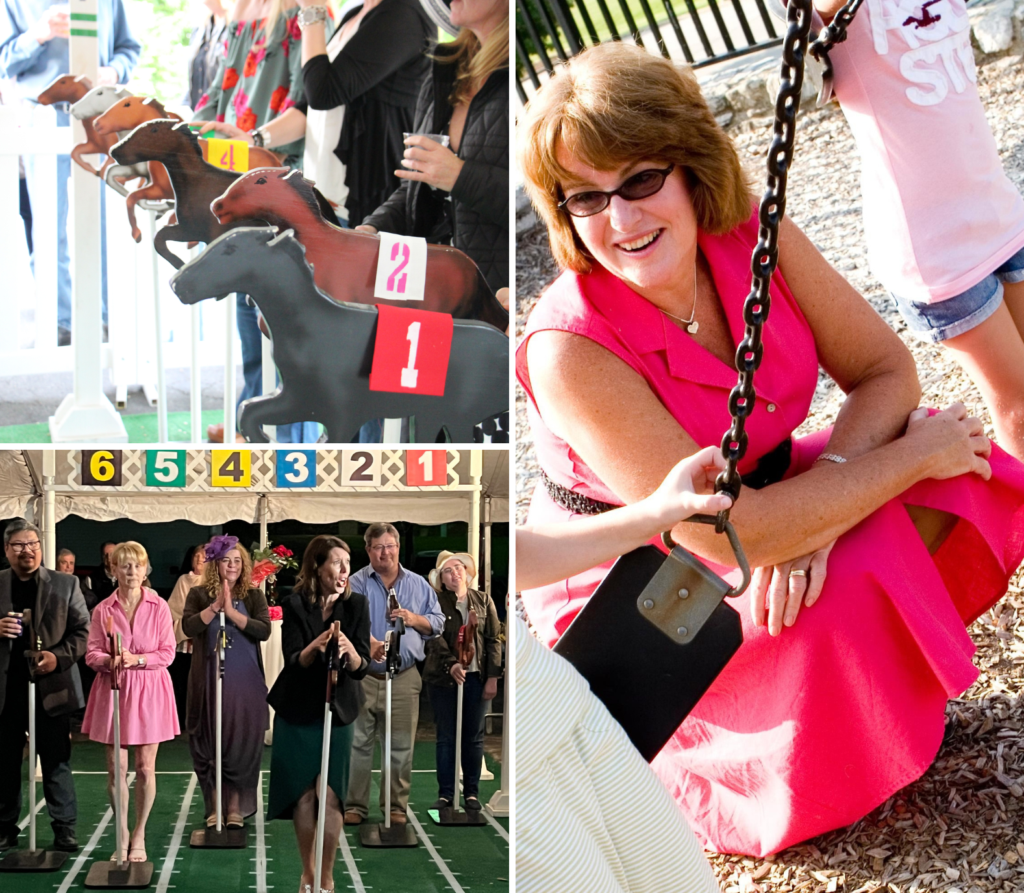
The gift basket raffle was just the beginning. In 2016, the team added a second breast cancer fundraising event – The Double D Derby. The event was named in honor of Suzanne’s close friend, Debbie Dominguez, who died from metastatic breast cancer in 2014.
“It’s hard to explain, but it’s a lot of fun,” Suzanne said. “We auction off six stick horses, and then the winner names it and assigns someone to be the jockey. During the race, we roll dice to determine which stick horses move up a spot.”
The Double D Derby includes additional fundraising opportunities, including a wine pull, bourbon auction and purse raffle. Additionally, the team puts together packages that are raffled off, including a $500 Southwest Airlines gift card and tickets to local sporting events.
For Suzanne, the success of both fundraisers comes down to one simple idea: give people something they enjoy doing, and they are more likely to support the cause.
“It’s a basic idea,” she said. “Find something that you like to do and people like instead of just asking people for $10 or $20. People are more willing to spend money if they are having a good time.”
Knowing When to Try New Breast Cancer Fundraising Ideas
For several years, the team held both the basket fundraiser and Double D Derby. But as fundraising evolved, Suzanne and the team weren’t afraid to make changes.
“We see what works and what doesn’t,” Suzanne said. “If something doesn’t work, we’ll replace it with something new. After the 2020 basket fundraiser, it got harder to get people to donate items for the baskets, so we phased it out to focus on the Derby.”
Suzanne and the team didn’t stop finding new ways to bring people together in support of Komen. In addition to the Derby, which is held on the last Saturday of April, the team organizes a cornhole tournament every October during National Breast Cancer Awareness Month.
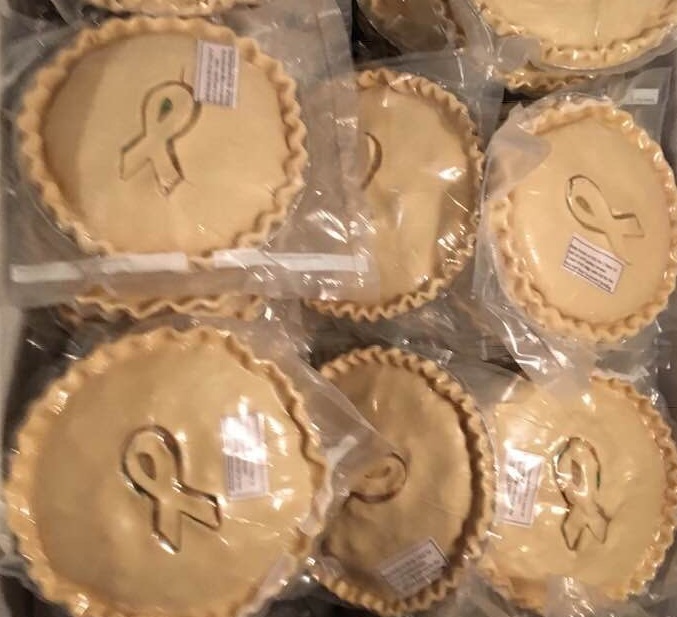
The next fundraising tradition came from Suzanne’s own kitchen: homemade pot pies.
“The pot pies started with me making 10 of them,” she said. “People love these pot pies. Now, with the help of my team, we make 300 full-size pot pies every year.”
More than a Fundraiser: Always Ready to Help
Fundraising is only one of the ways Suzanne supports Komen. Over the years, her involvement has grown from raising money to helping other participants find their own ways to support the cause.
Each year, Suzanne helps organize a Team Captain Kickoff for the Walk. During the event, she offers guidance on fundraising, team recruitment and available resources. Additionally, she participates in an annual survivor breakfast.
“I do whatever Komen asks me to do,” she said. “If it’s going to help raise money, I’m going to do it. I want people to get involved.”
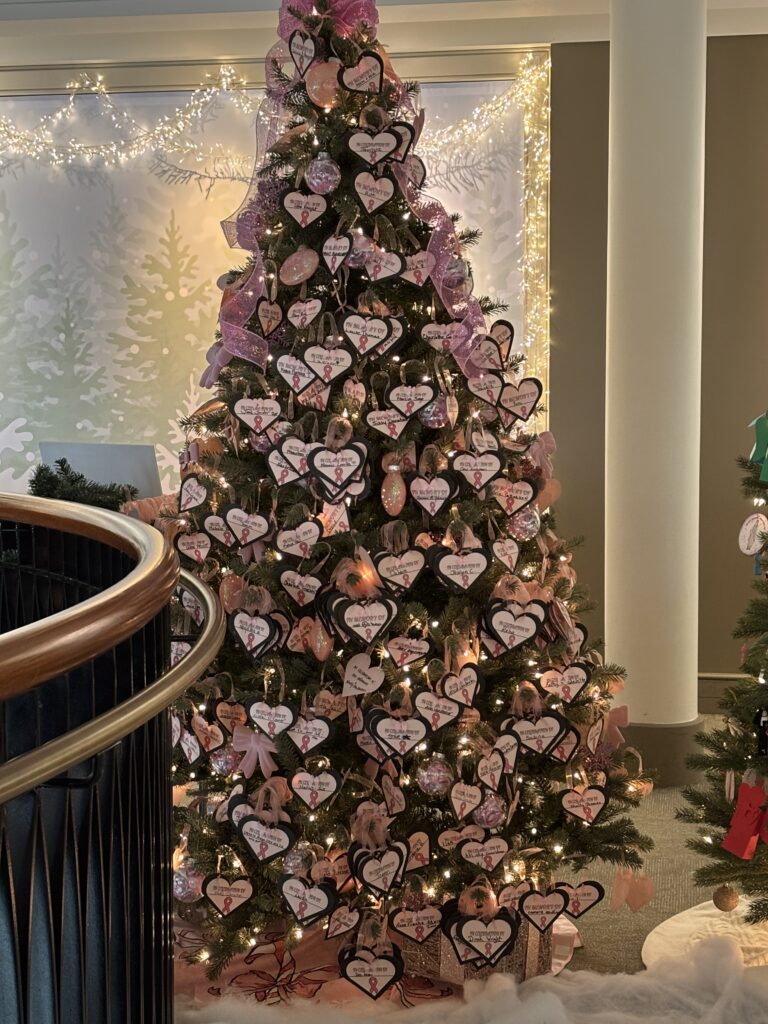
That mindset led Suzanne to take on an additional volunteer role in 2025 – making custom ornaments for the Komen tree at the Indiana Historical Society’s Festival of Trees in December.
“I made about 100-150 paper ornaments that people could write the name of the person they were dedicating the ornament in memory or celebration of,” Suzanne said. “The next day, I got a call from the museum saying they were out of ornaments and needed more. The tree ended up with about 1,500 ornaments. It was breathtaking to see.”
Suzanne’s already planning for an even bigger Komen tree in 2026 and has already started working on the ornaments – with a little help from her friends.
“I’ll invite them over for dinner, feed them and hand them a pair of scissors and make them work,” she said.
Making a Difference Together
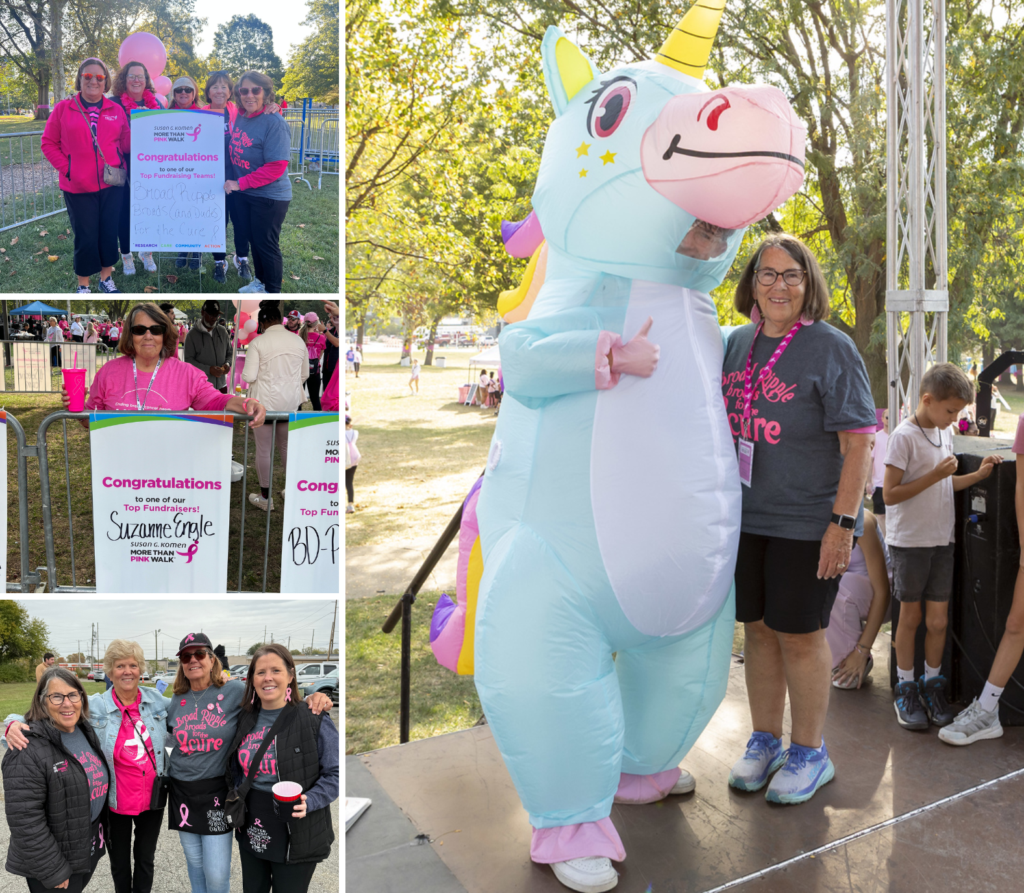
What started as a single fundraiser in 2006 has grown into a community that means as much to Suzanne as the money they raise. The Broad Ripple Broads have grown, evolved and experienced the loss of loved ones to breast cancer along the way. However, the spirit behind their fundraisers has remained the same – to create breast cancer fundraising events that bring people together, have fun and make a difference at the same time.
Read more about Suzanne’s breast cancer experience and how advances in research shaped her treatment in the Part 1 of her story.
Statements and opinions expressed are those of the individual and do not express the views or opinions of Susan G. Komen. This information is being provided for educational purposes only and is not to be construed as medical advice. Persons with breast cancer should consult their health care provider with specific questions or concerns about their treatment.