
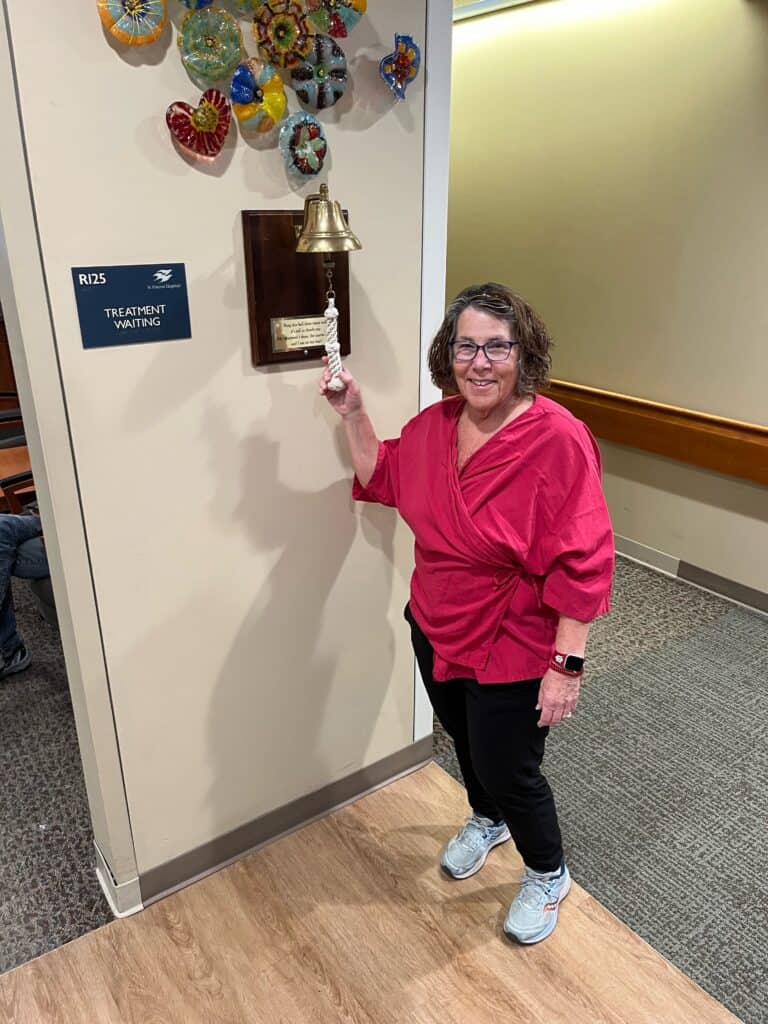
In the first of a two-part series, Suzanne Engle shares her experiences with breast cancer and how advances shaped her care.
Suzanne never thought a small symptom would lead to her first breast cancer diagnosis 20 years ago. Then, after 17 years of clear mammograms, she found herself facing breast cancer again. Today, the two-time breast cancer survivor shares how advances in treatment changed her experience and reinforced her belief in the power of research.
A Symptom She Almost Ignored
When Suzanne first experienced spontaneous nipple discharge in 2006, breast cancer was the furthest thing from her mind.
“I thought I had spilled coffee on my pajamas – no big deal,” she said. “It happened again a few days later, and I realized it was coming from my right breast.”
After discussing it with her doctor, Suzanne, then 50, scheduled a diagnostic mammogram, which found no abnormalities. Next, she had a ductogram, a type of mammogram where a contrast dye is injected into the milk duct to identify the source of nipple discharge.
“The radiologist didn’t see anything, but she said I needed to have the duct removed,” Suzanne said. “I didn’t know it was breast cancer until the pathology report came back after my surgery.”
Suzanne was diagnosed with ductal carcinoma in situ (DCIS), a non-invasive breast cancer that begins in the milk ducts. Her treatment plan included a lumpectomy, followed by six weeks of radiation therapy.
Unexpected Side Effects from Radiation
“I truly believe the reason I wasn’t worried was because people raised funds for research, which led to better detection and treatment methods. I thought raising money was the least I could do to pay it forward.”
Suzanne Engle
“I wasn’t scared,” she said. “I knew people weren’t dying as often, and I thought, ‘Okay, this is going to be a life inconvenience.’”
Instead, Suzanne experienced painful burns, exhaustion and a much longer recovery than she expected.
“The doctors said I’d feel back to myself in three to six months,” she said. “I think it took me a whole year to feel back to myself. The big joke in my family was, ‘Will Mom make it through Final Jeopardy?’”
Despite the difficult recovery, Suzanne was grateful for the care she received and the advances in treatment that gave her a good prognosis. After completing treatment, Suzanne decided to fundraise to support others facing breast cancer.
Seventeen Years of Survivorship
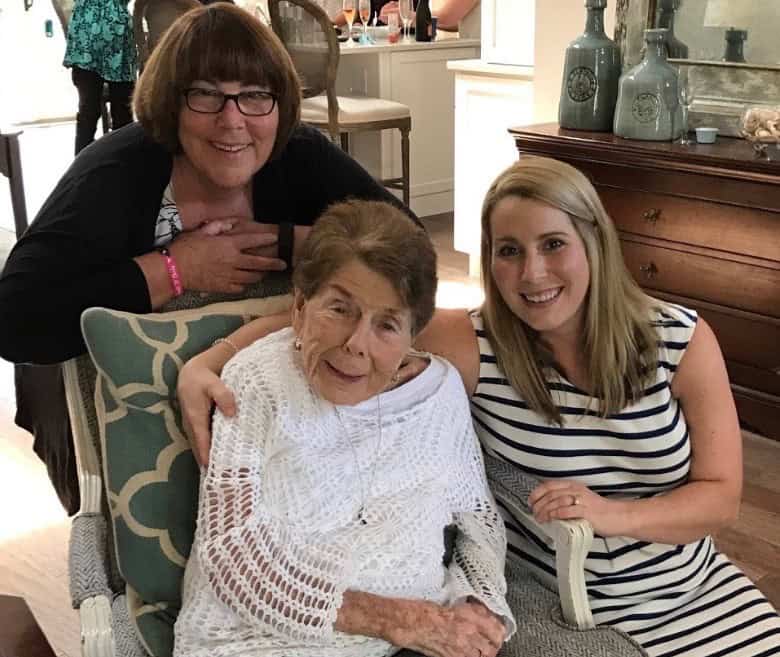
Over the next 17 years, Suzanne never missed her annual mammogram. Every screening showed no evidence of disease. She continued to fundraise and support Komen, becoming a dedicated advocate and important part of the breast cancer community.
Then, after her routine mammogram in 2024, Suzanne’s doctor recommended a biopsy of her right breast. Even then, she wasn’t overly concerned.
“I didn’t believe it was anything other than scarring from all the radiation,” she said.
Suzanne was walking through Disney World with her grandkids when she received the call from her radiologist with her biopsy results.
“She said I sounded busy, and I said, ‘If you’re going to tell me I have breast cancer, yes, I am busy,’” Suzanne said. “She said she’d call me back, but I told her to just tell me. I had breast cancer again, and it was in my right breast.”
An Unexpected Second Breast Cancer Diagnosis
After Suzanne returned home, her doctor ordered a breast MRI to better understand the extent of the disease before treatment. During the MRI, doctors found something no one expected: a suspicious mass in her left breast.
“I thought it was impossible,” she said. “I didn’t think you could get breast cancer on both sides.”
A second biopsy confirmed the mass in her left breast was invasive breast cancer.
“Once again, I had ductal carcinoma in situ in the right breast,” Suzanne said. “The left was invasive breast cancer. I remember thinking, ‘Damn, now I’m going to have to have chemo.’”
Research Fuels Personalized Treatment
Suzanne’s doctor ordered an Oncotype DX® test to determine her best treatment path. When the results came back, she learned she would not need chemotherapy.
“That’s why we fundraise,” she said. “Things change. Doctors get smarter. It’s not one-size-fits-all anymore. It’s becoming more personalized to what you have and your recurrence probability. It just reinforced all the work that goes into fundraising.”
This time, Suzanne’s treatment included bilateral lumpectomies and four weeks of twice-daily radiation therapy.
“Thankfully, I didn’t experience the same side effects from radiation the second time,” she said. “The doctor had a whole skin care regimen to help prevent any burning. I don’t know if they did the trick or not, but the treatment was much easier.”
A Commitment to the Breast Cancer Community
After experiencing breast cancer twice, Suzanne has a deeper appreciation for the research, medical advances and support systems that helped guide her care.
Her appreciation has continued to shape the way she supports others facing breast cancer, and her dedication to the cause has grown into a passion for fundraising, volunteering and bringing her community together.
Read more about Suzanne’s unique fundraising and volunteerism in the next part of her story.
Statements and opinions expressed are those of the individual and do not express the views or opinions of Susan G. Komen. This information is being provided for educational purposes only and is not to be construed as medical advice. Persons with breast cancer should consult their health care provider with specific questions or concerns about their treatment.