October is National Breast Cancer Awareness month. Read more about Amanda, Breast Honesty and Komen’s Don’t Fail the Girls campaign.
Finding a Lump
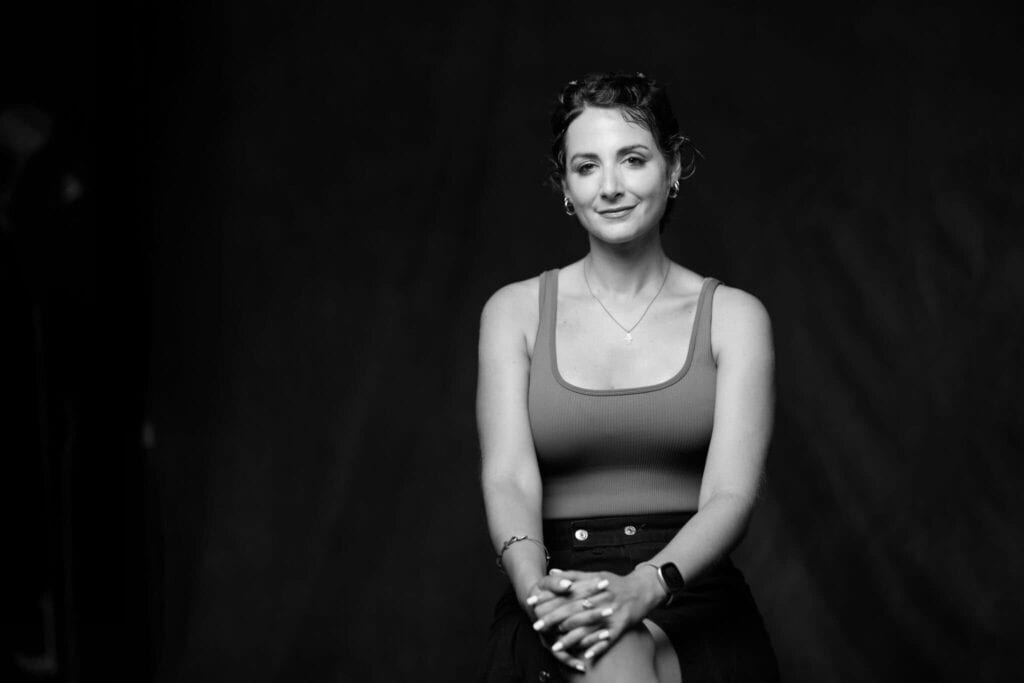
In January 2025, Amanda felt a lump the size of a frozen pea in her breast. “I did the thing we’re supposed to do,” she said. “I went to my gynecologist and she agreed it didn’t feel right, so she wrote me a script for a mammogram.”
Amanda had the mammogram, followed by a breast ultrasound. “Every place I called for the ultrasound said they couldn’t get me in until April, so I chose a radiologist I wasn’t familiar with, because I wanted to go right away,” Amanda said.
“It’s Just a Cyst”
After Amanda’s ultrasound, the radiologist came in and told her not to worry, what she felt was a regular cyst. “He said I had nothing to worry about, it was just a cyst. He told me to come back when I was 40,” said Amanda. “He didn’t order a breast biopsy; he didn’t say come back in six months to have it checked.”
When Amanda left her appointment, she tried to make peace with what the radiologist told her. “He’s a professional who obviously knows more than I do; he just gave me great news, but something wasn’t sitting right with me,” she said. “But I told myself, ‘you’re not a professional, you don’t know anything. Let it go.’ But deep down, I knew something felt off.”
A Second Opinion
Amanda ignored the lump and her growing feelings that something wasn’t right until she mentioned the appointment to two colleagues. “They pushed me. They told me I was my biggest advocate, and if I felt something was wrong, I needed to keep pushing,” Amanda explained.
In October, with her coworkers’ encouragement, Amanda, who previously had thyroid cancer, reached out to her endocrinologist with her concerns. He immediately arranged for her to see a breast oncologist.
“Right before my appointment, I felt the lump again, which I hadn’t since January,” Amanda said. “I was horrified that it now felt like a golf ball. Getting a second opinion changed everything.”
A Breast Cancer Diagnosis
The breast oncologist agreed that something wasn’t right and he scheduled a breast MRI for the following week. Days later, Amanda underwent a breast biopsy on the mass. “It showed I had stage 2A ER+ breast cancer that was growing rapidly. It was now invasive to my lymph nodes,” Amanda said. “I think back to January and wonder what stage it would have been then. What if I had listened to the radiologist and waited seven years? Would I have survived that long? It’s scary to think about.”
Not Letting Cancer Decide
One of the first things Amanda’s care team asked her was whether she wanted to freeze her eggs. “It was incredible that they asked me that. I was single and I wasn’t dating anyone. But I didn’t want cancer deciding whether or not I could have children someday,” Amanda said. “That should be my decision.”
Amanda is grateful that her team not only thought about IVF but also helped her find resources to help pay for the egg retrieval process. “I couldn’t afford IVF on my own, but the social worker assigned to me was great,” she said. “She helped me find organizations that would cover this. It’s a blessing that my IVF was taken care of.”
Treatment Whirlwind
Amanda was diagnosed at the end of October, had her egg retrieval surgery the second week of November and then started chemotherapy a week later. “Everything went so fast,” Amanda recalled. “They want you to start chemo right away, so I had to get a port placed, then we had to squeeze in the IVF before chemo started.”
Once Amanda completed the IVF, she started taking an estrogen blocker. “I started having wonderful hot flashes and my joints felt like I’m 90,” she said. Her continuing treatment included chemotherapy, a mastectomy and radiation therapy.
Staying True to Herself
Amanda stayed active during chemotherapy. She worked throughout treatment and also made sure to continue running and going to kickboxing classes. “Even on the hard days, I wanted to maintain who I was before cancer,” she said. “I felt like my identity was already being taken away from me physically. I wasn’t willing to let cancer take away who I was as a person, too.”
Choosing a Mastectomy
She chose to have a mastectomy because if she does have children one day, she wants to have the option to breastfeed. “I don’t know what my life will look like five years from now,” she said. “I don’t know if I’ll have children. I don’t know if breastfeeding will be important to me. But I wanted the choice. Cancer had already taken enough from me; I wasn’t going to let it take that too.”
Trust Yourself
Sharing her story has helped Amanda process her breast cancer experiences. “It’s important to take ownership of your health. Nobody knows your body the way you do. If something doesn’t feel right, keep asking questions until you feel confident in the answer,” Amanda said. “I want people to know that they’re not crazy. If something still feels wrong, listen to that voice. Get another opinion. Push for answers. It could save your life.”
Listen to Amanda share her story on Komen’s Real Pink podcast. You can also learn more about the importance of advocating for yourself.
Statements and opinions expressed are those of the individual and do not express the views or opinions of Susan G. Komen. This information is being provided foreducational purposes only and is not to be construed as medical advice. People with breast cancer should consult their health care provider with specific questions or concerns about their treatment.