
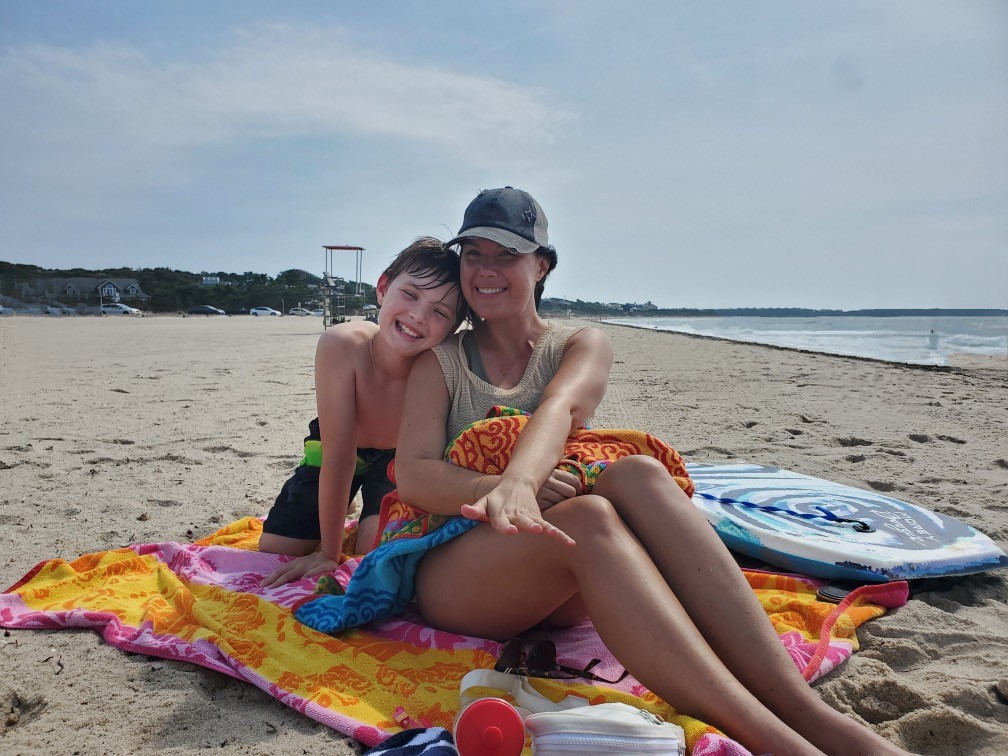
At just 37, Kristi Turner received a metastatic breast cancer diagnosis, which began a treatment journey filled with unexpected challenges and life-changing decisions. As a single mom, she faced the physical and emotional impact of cancer along with growing financial strain. With support from Komen’s Patient Financial Assistance Program and the comfort of her beloved corgi, she found stability during her hardest moments.
A Second Opinion That Changed Everything
Kristi’s breast cancer symptoms began with ongoing back pain she assumed was a pulled muscle. She made an appointment with her primary care physician. “My doctor noticed that my right breast was larger than my left, but she didn’t seem overly concerned,” Kristi said. “She said it was most likely an infection and prescribed antibiotics.”
Later, she shared the doctor’s findings with her coworkers. “At the time, I was a manager at a medical spa and worked with several nurses,” she said. “My doctor’s reaction surprised them, and they encouraged me to get a second opinion.”
She made an appointment for the following day. The doctor recommended an immediate biopsy. That same night, she received the results – it was breast cancer. An ultrasound and CT scan later confirmed that the cancer had already metastasized (spread) to her bones.
Facing Metastatic Breast Cancer as a Single Mom
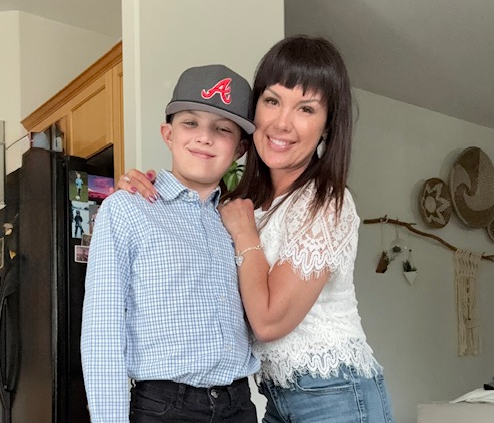
“Everything happened so fast, and I didn’t start crying until I got back to my car,” she said. “It’s so surreal.”
After absorbing the initial shock of her diagnosis, Kristi chose to face her treatment with resilience. “I was a single mom, and my first thoughts were of my son, Jaxon,” she said. “He can’t be without a mother. I was determined to do everything in my power to be here for him. There was no other option.”
Kristi’s treatment began with 12 weeks of chemotherapy. After completing chemo, scans showed no evidence of disease in her breast or lymph nodes. Her oncologist explained the next phase of treatment: monthly injections pertuzumab and trastuzumab, targeted therapies for HER2-positive metastatic breast cancer.
A Gut Feeling She Couldn’t Ignore
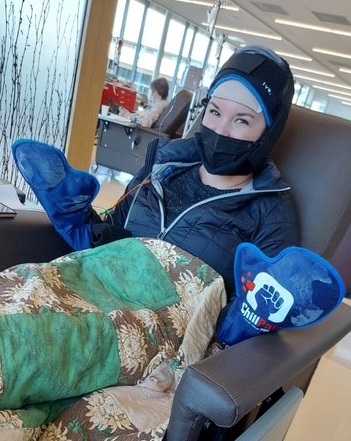
“My oncologist stressed our focus was on keeping the cancer from spreading to my brain or other organs,” she said. “That terrified me. For the next three months, every time I saw her, I would ask for a brain scan. I wasn’t experiencing any symptoms of brain metastasis, but I just had a bad feeling.”
To help alleviate Kristi’s fears, her oncologist finally agreed to an MRI. “Sure enough, they found four tumors in my brain,” she said. “The doctor didn’t want to do radiation, which frustrated me. I felt like I was going to have to advocate for myself at every appointment.”
Kristi decided to get a second opinion regarding the treatment of her brain tumors. While she has moved forward with this oncologist for brain-related treatment, she stayed with her original oncologist for the rest of her treatment.
Her new oncologist agreed that radiation would be the best way to treat the new tumors in her brain. Kristi underwent stereotactic radiosurgery (SRS), a procedure that delivers precise radiation therapy to treat brain tumors.
“It only took one session to get all four tumors,” she said. “Then, I started an oral chemo pill, which has helped keep the cancer from continuing to spread.”
How Komen’s Financial Assistance Made a Difference
After beginning treatment, Kristi continued working at the medical spa, but she soon moved to part-time. “It was a slow progression from there to no longer working,” she said. “That was really hard. I remember thinking, ‘How am I going to pay for groceries? How am I going to pay my bills?’”
The nurse navigator at the hospital provided Kristi with resources, which included a list of organizations that provide financial assistance to people in treatment for breast cancer. She applied for a grant through the Komen Patient Financial Assistance Program.
“It was a very easy process, and Komen was the most responsive of the organizations I contacted,” Kristi said. “Anytime I had questions during the process, they were quick to respond with updates. I received a grant within weeks of applying. It was a weight lifted off of my shoulders.”
A Corgi’s Comfort Inspires Children’s Book

As Kristi navigated treatment, she found comfort in Stella, her Pembroke Welsh Corgi. “She always senses when I am stressed or concerned and stays by my side every day,” Kristi said. “She was there for my tough days and happy moments.”
Stella also served as the inspiration for a children’s book Kristi wrote to help parents navigate difficult conversations about cancer with their children.
“Explaining cancer to your children is a very tough topic,” she said. “I thought if I could incorporate Stella into a story, I could provide parents with tidbits to help have those hard conversations.”
Kristi worked with a local illustrator to create a book that follows Stella and a group of corgi friends as they provide support to a mom going through cancer treatment.
The Next Chapter: Life, Love and Hope for the Future

At this time, Kristi’s cancer has remained stable through daily medication and monthly bone infusions. Every three months, she undergoes CT scans to monitor the progression of the disease.
In April 2025, she married her longtime love, Shawn, in an intimate one-on-one ceremony in Belize. “He’s been so supportive, understanding and gracious of everything I have to endure,” she said. “It’s been lovely merging our families. I feel comfortable and taken care of, which is a nice feeling to have.”
Her Advice: Trust Yourself and Speak Up
As Kristi reflects on her experience with metastatic breast cancer, she hopes her story inspires women to stay vigilant and advocate for their own breast health. “If anything seems abnormal – even if it’s just a gut feeling – push to get it checked out,” she said. “You can’t predict what’s going to happen. You just have to take care of yourself in that moment and do what feels right.”
Statements and opinions expressed are those of the individual and do not express the views or opinions of Susan G. Komen. This information is being provided for educational purposes only and is not to be construed as medical advice. Persons with breast cancer should consult their health care provider with specific questions or concerns about their treatment.