
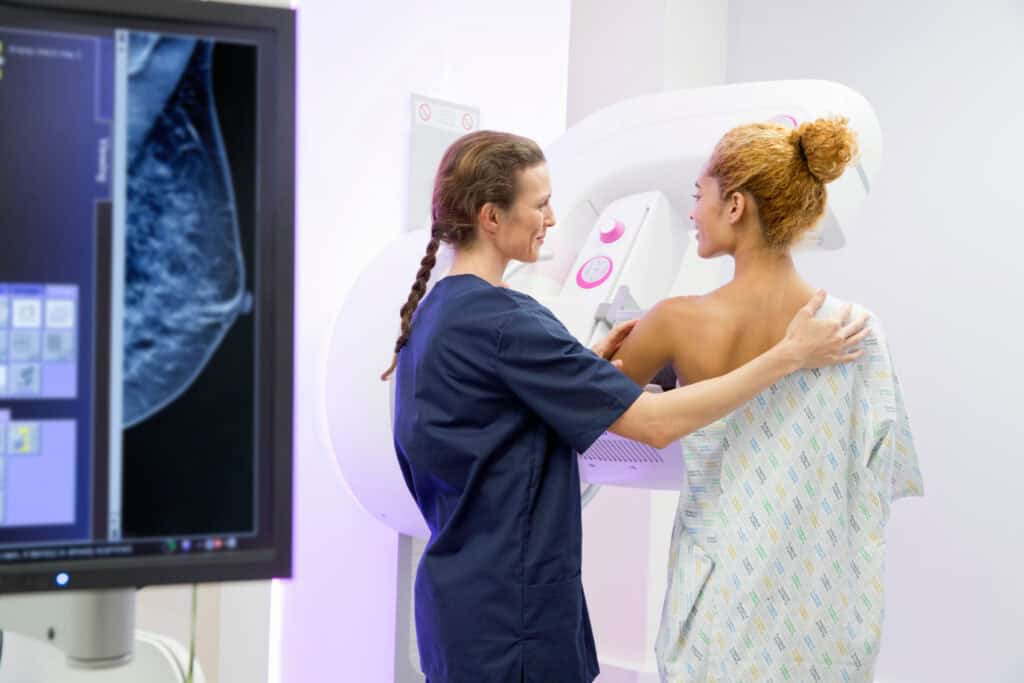
Mammograms remain the most effective screening tool today to find breast cancer in most women. They are the best way to find cancer early, when it is most treatable, and chances for survival are highest. And while the medical community agrees on the importance of screening mammograms, there are at least six different sets of guidelines today about when and how often women should be screened.
Navigating these different guidelines can be confusing, especially with so many factors at play. What age should you start your screening? How often should you be screened? When should you stop screening? Will you ever need additional imaging, like an ultrasound or MRI?
The good news is that you don’t have to figure this out on your own. Because your screening plan should be as unique as you are, your doctor can help you navigate these guidelines and create a unique plan based on your personal risk factors, such as family health history and lifestyle. Below are five steps to help eliminate the confusion of conflicting mammogram guidelines and take a proactive role in your health.
- Compare the Different Screening Guidelines Side by Side
Mammogram guidelines are created by different medical organizations, and each one weighs the benefits and potential harms of screening differently. Please note that these guidelines are for women at average risk of breast cancer, and there are other guidelines for women who are at higher risk. While routine screening is important for all women, it is even more critical for those at higher risk, who may need to begin screening earlier, and more frequently.
Look closely at the differences between each organization for the recommended starting age, screening frequency, when screening should stop and guidance on dense breasts. Understanding that these recommendations are based on different interpretations of the same evidence from experts in the field can help reduce any confusion.
For example, the clinical screening guidelines set by the U.S. Preventive Services Task Force (USPSTF) directly inform the required coverage for screening by the Affordable Care Act (ACA). The ACA mandates most private health insurance plans and Medicaid expansion programs cover specific preventive services, including screening mammograms every 1-2 years for women 40 years and older, without any out-of-pocket costs. The Protecting Access to Lifesaving Screenings (PALS) Act, which was passed by Congress in 2021, ensures the government maintains this coverage based on guidelines set by the USPSTF.
| Organization | When to Start Screening | Screening Frequency | When to Stop Screening | Guidance on Dense Breasts |
| U.S. Preventive Services Task Force (USPSTF) | Age 40 | Every 2 years | Through age 74 | States that evidence is currently insufficient to assess benefits and harms of supplemental screening for women with dense breasts on an otherwise negative mammogram. |
| National Comprehensive Cancer Network (NCCN) | Age 40 | Every year, with 3D mammography (tomosynthesis) | Continue if in good health and expected to live at least 10 more years | Supplemental screening should be considered, but there is insufficient evidence to routinely mandate ultrasound or MRI for dense tissue with no other risk factors. |
| American College of Physicians (ACP) | Age 50; women ages 40–49 should make an individual decision with their physician | Every 2 years | Through age 74; individualized beyond age 75 | No separate screening recommendation based solely on breast density. |
| American College of Radiology (ACR) | Age 40 | Every year | Continue while in good health and willing to undergo treatment if cancer is found | Women with dense breasts should discuss supplemental screening options; risk assessment is encouraged by age 25. |
| American Cancer Society (ACS) | Ages 40–44: option to start annual screening; Age 45: routine annual screening | Annual ages 45–54; every 2 years or continue annually beginning at 55 | Continue if in good health and expected to live at least 10 more years | Insufficient evidence to recommend for or against MRI screening solely because of dense breasts. |
| Society of Breast Imaging (SBI) | Age 40 | Every year | Continue while in good health | Supports annual screening beginning at age 40 and encourages discussion of supplemental screening for women with dense breasts, especially when additional risk factors are present. |
- Gather Your Family Health History Before Your Appointment
Talk with your relatives about any history of breast, ovarian, prostate or pancreatic cancer. If anyone else in your family has a history of breast cancer or another type of cancer, your doctor can help you understand how this could impact your risk of breast cancer.
Komen also has an online resource called the My Family Health History tool, which is a web-based tool that makes it easy for you to record and organize your family health history. It can help you gather information that’s useful as you talk with your family members, doctor or genetic counselor. This information can empower you to be proactive in making future decisions about your health, including your breast cancer screening plan.
- Learn More about Your Personal Risk Factors, Including Breast Density
Factors such as age, family history, inherited genetic mutations, dense breast tissue and previous breast biopsies or radiation to the chest area early in life can affect your risk of developing breast cancer and may influence your screening timeline.
Dense breast tissue can make cancers harder to detect on mammograms, because dense breast tissue and tumors both appear as solid white areas, unlike fatty tissue, which appears dark. Aside from making a mammogram harder to read, very dense breasts are linked to a higher risk of breast cancer. In fact, women with very dense breast are four to five times more likely to develop breast cancer than women with fatty breasts. Ask your doctor whether you have dense breasts and whether additional screenings like an ultrasound or breast MRI may be appropriate for you.
- Prepare a List of Questions to Ask Your Doctor
Preparing questions before your appointment can help you address your concerns about screening frequency, starting age, your breast density or other risk factors and any conflicting recommendations you’ve encountered. Instead of focusing on which guideline is correct, talk to your doctor about which recommendation best fits your age, health history, personal risk and lifestyle.
Komen believes everyone should have access to regular screening when they and their health care providers decide it’s best, based on their personal risk of breast cancer.
Remember that screening recommendations are not one-size-fits-all for life. Your risk factors, overall health and family history may change, making it important to revisit your screening plan regularly.
Komen has a helpful worksheet that can help you get the conversation started:
- Educate Yourself with Trusted Health Information
Seek evidence-based educational information about screening mammograms from trusted medical organizations and health care providers, rather than relying on social media posts or personal stories. Bringing trusted and credible health information to your appointment can help foster a productive discussion with your doctor.
Learn more about breast cancer screening and early detection with Komen’s Breast Cancer 101 video series:
Check out even more resources about breast cancer risk factors and screening on Komen’s ABC pages.
For more information on breast health or breast cancer, please call the Komen Patient Care
Center’s Breast Care Helpline 1-877 GO KOMEN (1-877-465-6636) Monday through Thursday,
9 a.m. to 7 p.m. ET and Friday, 9 a.m. to 6 p.m. ET or visit komen.org. Susan G. Komen does
not provide medical advice.