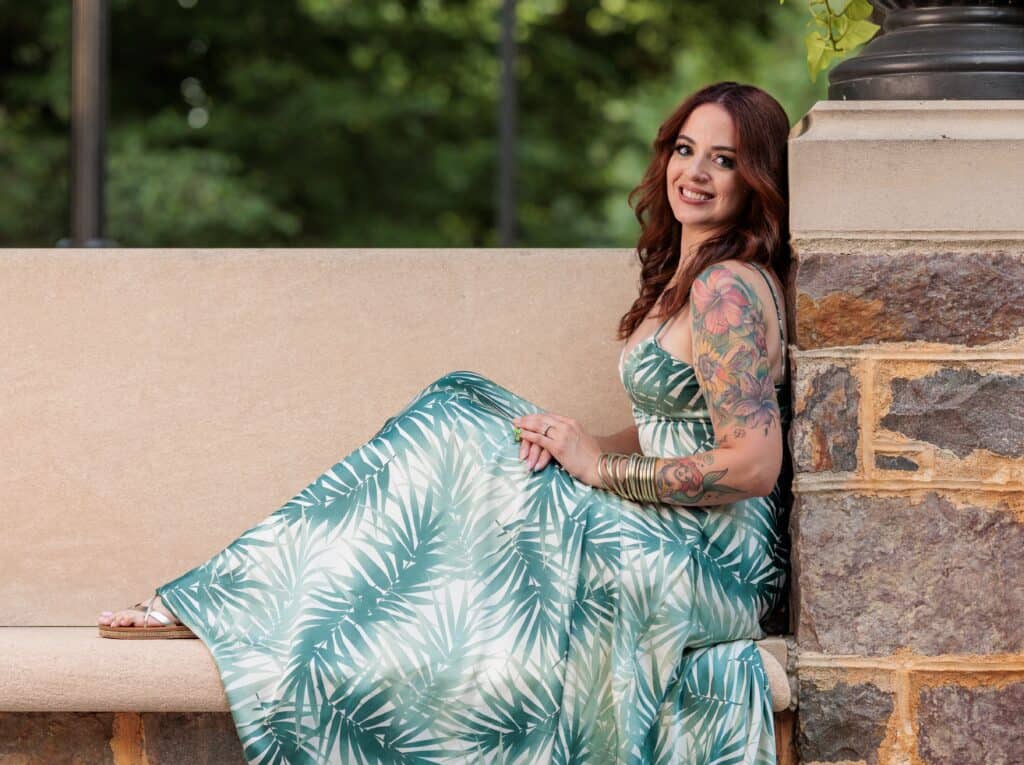
When Sheila was diagnosed with breast cancer at 35, she never expected that advocating for herself would become such an important part of her story.
For nearly two years before her diagnosis, she experienced ongoing breast sensitivity. Then, after getting a hug from her youngest daughter, the sensitivity turned into a burning sensation. At that moment, she knew something was wrong.
“I mentioned it to my doctor, and she did a clinical breast exam,” Sheila said. “She didn’t find anything concerning and told me it was probably hormonal.”
Breast Sensitivity Leads to Further Testing
Her next appointment was with a different provider and once again, Sheila mentioned the ongoing sensitivity. He performed another clinical breast exam but didn’t find anything concerning. He offered to refer her for a diagnostic mammogram to help ease her worries.
“To be honest, I didn’t want to go to that appointment,” she said. “I didn’t want to miss work, and I was in school getting my associate’s degree and had class that day. But I knew I had to take care of myself and just get it checked.”
It was Sheila’s first mammogram and she was unsure of what to expect. After the mammogram, she returned to the waiting room. She was told they needed to do a breast ultrasound.
The ultrasound revealed several suspicious masses in her right breast that needed to be biopsied. But because of pandemic-related delays, the first available appointment was three months away.
Breast Cancer at 35: Getting the Answers She Needed
Sheila knew she needed the biopsy, but the language in her ultrasound report was difficult to understand. Unsure of what the findings meant, she sent the report to her stepmother in Puerto Rico, who worked at a hospital performing mammograms. Her stepmother immediately recognized that Sheila needed answers sooner and told her that waiting three months for a biopsy was too long.
“She found a doctor in Pittsburgh who could see me the following week but that was a five-hour drive,” Sheila said. “When I told my husband, he said, ‘I don’t care how far we have to drive, we have to do it.’”
The day after the biopsy, Sheila received a call from the hospital. She had ductal carcinoma in situ, stage 0 breast cancer.
Learning About Her BRCA2 Inherited Gene Mutation
“Learning that I carried a BRCA2 mutation added another layer to my journey, but it also gave me the courage to make difficult decisions to protect my health.”
Sheila Rosado
As a young mom diagnosed with breast cancer at 35, Sheila immediately began thinking about what her diagnosis could mean for her three daughters.
“The first thing I told my oncologist was that I wanted to have genetic testing,” she said. “I have three girls and I had to prepare myself for whatever might come later on.”
Genetic testing confirmed that Sheila had a BRCA2 inherited gene mutation. BRCA1 and BRCA2 are the most well-known genes linked to breast cancer. Mutations in these genes are also linked to an increased risk of ovarian cancer, pancreatic cancer, melanoma and other cancers.
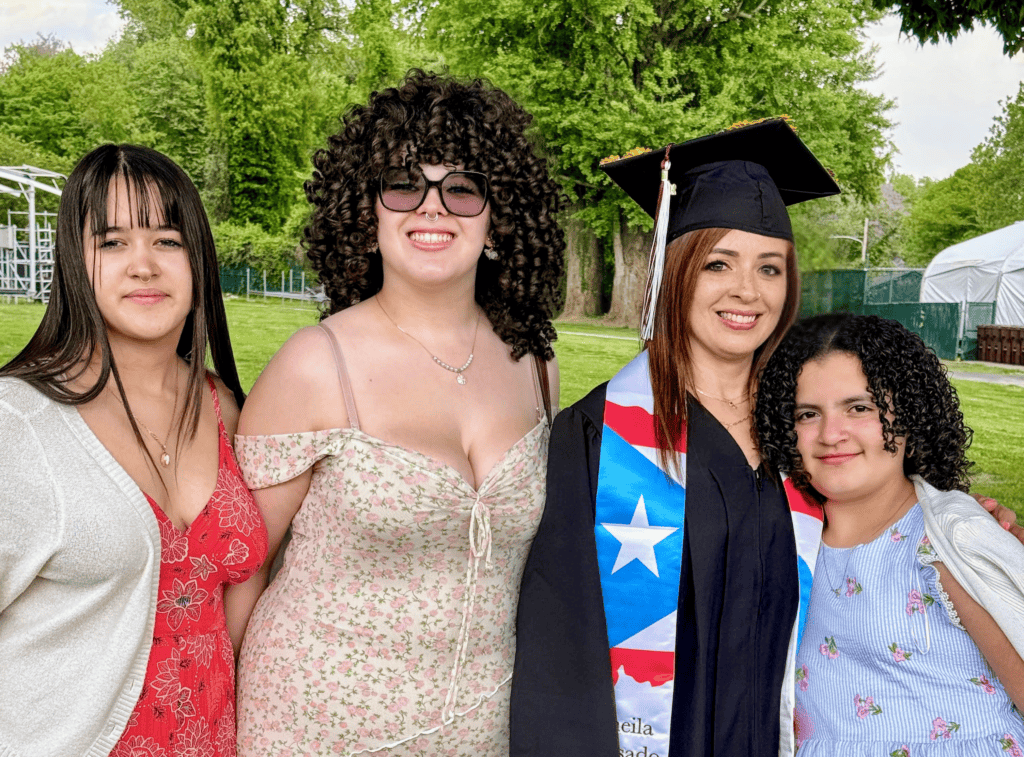
Sheila and her three daughters at her college graduation. Despite the challenges she faced from multiple surgeries, Sheila continued to dedicate time to her studies, earning an associate and bachelor’s degree. Currently, she’s working toward earning her master’s degree in multicultural education.
Choosing a Double Mastectomy
Her surgeon told her she would need to have her right breast removed. But Sheila knew she wanted to have a double mastectomy.
“I had a cousin whose cancer returned after she had a single mastectomy,” she said. “The cancer returned and became metastatic, and she died. I couldn’t stop thinking about her, and I was not willing to keep one breast and take the risk.”
Because of her decision to have both breasts removed, Sheila did not have to undergo additional treatment. But the surgery wasn’t the end of her experience.
The Decision to Go Flat After Breast Reconstruction
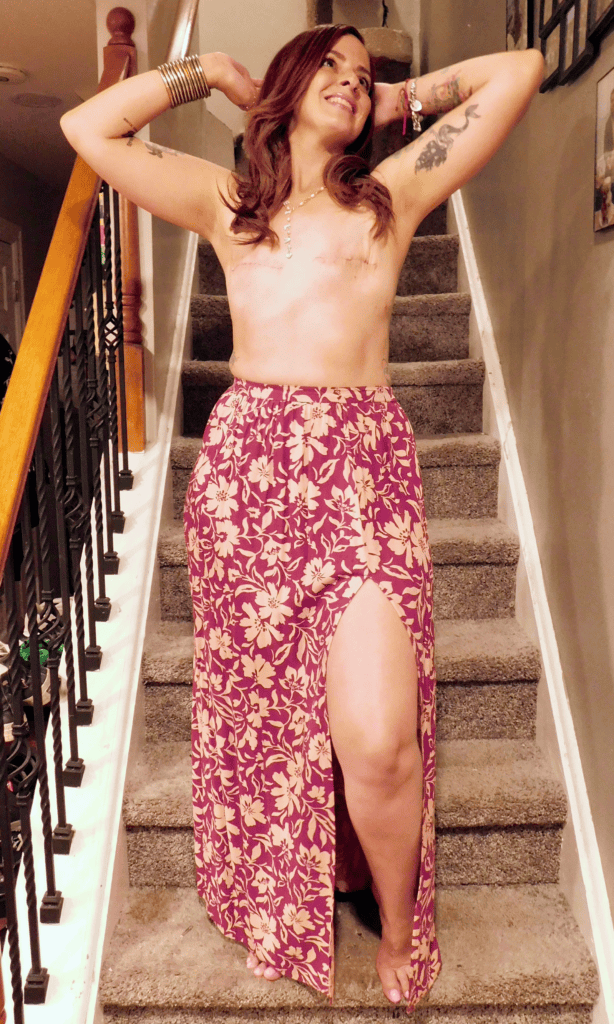
After complications from reconstruction, Sheila made the decision to have her implants removed and remain flat.
“Reconstruction was a whole fight,” she said. “Finding information was hard, and I wasn’t sure what I wanted to do. I knew having reconstruction with implants could cause a lot of issues, but I decided to give it a try.”
It was a decision Sheila came to regret. She had multiple surgeries to repair problems related to the implants and experienced a range of unexplained issues, including stiffness, body aches, anxiety and insomnia.
“It completely changed me,” she said. “I wasn’t motivated to do anything. I didn’t recognize my body anymore.”
After several months, Sheila met with her plastic surgeon to discuss removing her implants. His response shocked her.
“He was very abrupt and cold,” she said. “He questioned my request to have an aesthetic flat closure and assumed I would change my mind after the surgery. There was a complete lack of respect for my decision to remain flat.”
Sheila was firm in her decision. Immediately after the surgery, she felt the return of her old self.
“I had pressure in my chest holding me down,” she said. “I don’t regret removing my implants, and I am glad that I chose myself. My scars tell a story not just of what I went through, but what I overcame.”
Statements and opinions expressed are that of the individual and do not express the views or opinions of Susan G. Komen. This information is being provided for educational purposes only and is not to be construed as medical advice. Persons with breast cancer should consult their healthcare provider with specific questions or concerns about their treatment.