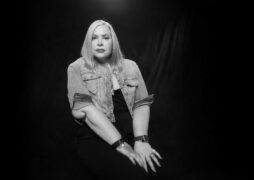
Dixie Feld’s family has a history of breast cancer. In 2007, she learned she had breast cancer. This is her story in her own words.
Family History of Breast Cancer
My family’s breast cancer story actually began in 1948, the year my great-grandmother was diagnosed with breast cancer. In 1957, at 59 years old, her daughter (my grandmother) was diagnosed with breast cancer. My mother was 78 years old when she was diagnosed in 1999. My mother also had two first cousins (their father was my grandmother’s brother) diagnosed. In 2001, at age 58, my sister was diagnosed with ductal carcinoma in situ (DCIS).
My Breast Cancer Diagnosis
In 2007, when I was 58, I finally heard those words myself: You have breast cancer. Those words change your life forever, but I believe early detection saved my life.
The mammography center had several years of my scans, all negative. The tumor was found during a routine mammogram. I had a second mammogram (called a diagnostic mammogram), a breast ultrasound and a breast biopsy. From January to October 2007, my life was put on hold. Everything we did revolved around my treatment and 144 doctor appointments.
Aggressive Treatment Begins
Because of family history, my medical history (including severe dysplasia of the cervix at 36, resulting in a hysterectomy) and my breast cancer diagnosis, my oncologist treated the cancer as aggressively as possible.
I had a lumpectomy and four lymph nodes were removed. Then, in March, a port was inserted and I started chemotherapy. I had four treatments of the standard breast cancer red devil cocktail. Infusions would take 5-6 hours on Thursday afternoons. It would be Tuesday before I could function and go back to work. My job suffered and I was fired because I could not work 40 hours a week.
Treatment Side Effects
The next part of my treatment plan was for 12 treatments of Taxotere and a year of Herceptin. Herceptin had just been released from clinical trials for HER2-positive breast cancer. After six treatments, I was having neuropathy and developed a rash.
We took one week off and the doctor had me go back to the original Taxol. I had six infusions of Taxol and Herceptin. By the last treatment, I was having anaphylactic reactions to the drugs. Once the Taxol treatment was finished, I had one more infusion of Herceptin and another anaphylactic reaction. Because of the severe side effects, treatment was discontinued in July. I had the port removed and another severe anaphylactic reaction and ended up in the hospital. My body had just had enough.
The last part of the treatment was radiation therapy, which I started in August. I had a total of 34 rounds.
The Hidden Parts of Breast Cancer
- I soaked my fingernails in bleach water to prevent fungus when I lost all my fingernails and toenails while on Taxol.
- I didn’t eat, yet I gained weight because of steroids. I was round-faced and pudgy.
- At one point, I looked in the mirror and hardly recognized myself – no hair, no eyebrows, no eyelashes and “moon face.”
- My body ached like I had the flu. There are really no words to describe it.
The Cost of Breast Cancer Treatment
My total treatment approached $250,000. We had fabulous medical insurance and met our $2,000 out-of-pocket maximum in January 2007. The stress of the cancer was enough and I am so thankful we did not have the stress of having to worry about medical bills or treatment plans not being paid. After losing my job, the financial stress was difficult, but we knew medical bills would be paid. I cannot imagine the added stress to women who are uninsured or underinsured.
The Value in Research
In 2005, the National Institutes of Health (NIH) started a study called the Sister Study. My sisters, my aunt and I joined. The initial criteria was to have a sister who had had breast cancer, but you had not. The NIH has been following us for 20 years, and I am so hopeful they will continue to have funding to continue their research. Their research has centered on the environmental factors of breast cancer. It is vital that this and other research continue.
I had genetic testing in 2007 and again in 2017. Both tests revealed no known genetic mutations at that period in time. Four generations with breast cancer is too many. The genetic makeup for my breast cancer was completely different from my grandmother’s, mother’s, or sister’s. Why? Without ongoing research, this question will never be answered.
Statements and opinions expressed are that of the individual and do not express the views or opinions of Susan G. Komen. This information is being provided for educational purposes only and is not to be construed as medical advice. Persons with breast cancer should consult their health care provider with specific questions or concerns about their treatment.