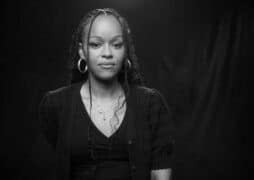

Karen Powell, a breast cancer nurse practitioner and reconstruction specialist, has spent 15 years caring for women undergoing mastectomies and reconstruction. Then, in 2024, she discovered a lump in her breast. She was 39 and hadn’t yet had a mammogram herself, given her age.
Finding a Lump
The night Karen felt the lump in her breast was a typical evening. Her husband was on a business trip and her four kids had spent the day at summer camp. “We had dinner and showers and evening snuggles,” she said. After the kids were in bed, Karen was planning the family’s next vacation and ordering groceries. And then it happened. She felt a lump.
“It was smaller than the size of my fingertip, but because of my background, I could feel the irregularity in it and I just knew,” Karen said.
A Family History of Breast Cancer
Karen’s grandmothers each had breast cancer – with very different outcomes. One of her grandmothers was diagnosed with breast cancer when she was 32, had chemotherapy and radiation and lived to be 87. Her other grandmother felt a lump in her breast when she was in her 60s, but never told anyone. She developed metastatic breast cancer and passed away three years later.
“In some ways, my grandmothers are the reason why I chose my career,” said Karen. “Their different ages and responses to treatment and advocating, or not, for themselves led to two very different outcomes for them. When we advocate for ourselves here in the moment, it’s not just for us. It’s advocating for the generations that come after us.”
Mammograms, Ultrasounds and a Biopsy
She had a baseline mammogram, ultrasound, MRI and a biopsy over the span of one week. Together, Karen and the radiologist, who is also her colleague, reviewed her mammogram images. “She said I know you know what this is, but we need to do a biopsy,” Karen recalled. “I was sitting on the table, processing what I believed, but hoping my suspicions were wrong. Nothing prepares you for that moment, not the education, the family history or even 15 years of being a breast cancer specialist.”
A Breast Cancer Diagnosis
The biopsy results showed Karen had invasive ductal carcinoma. During surgery to remove it, a very small area of invasive lobular carcinoma was also identified. The lobular tumor was very tiny, so it had not yet shown up on Karen’s mammogram, ultrasound or MRI. “Lobular grows in a straight line, so it’s usually caught in later stages,” Karen said. “But it was caught early for me and I consider myself extremely fortunate.”

Treatment Details
Because her breast cancer was caught in the early stages, Karen did not need chemotherapy. She opted to have a bilateral mastectomy with implant-based reconstruction, and had the implants placed in front of the muscle rather than behind it. “It’s a less invasive version of reconstruction and allows for less muscle deficits overall,” she said. Her surgery went well and recovery was pretty straightforward.
“There’s a lot of difficulty when it comes to a surgery decision,” she said. “You’re overwhelmed with making treatment decisions. I think it’s really hard for a woman who doesn’t know the process or is not educated about breast cancer to make that decision so early into a diagnosis, when everything seems overwhelming.”
Karen is on tamoxifen, a hormone therapy, and thankfully, her side effects have been manageable. “The early detection was the difference between tamoxifen and systemic chemotherapy,” she explained. “It can also be the difference between life and death.”
Karen also had genetic testing, but did not test positive for any inherited gene mutations.
From Breast Cancer Clinician to Patient
While Karen’s experiences helped her navigate treatment, she found being the patient was emotionally overwhelming. “My mind went to the worst of the situations,” she said. “I could rationalize my pathology report and know that if I was a clinician looking at my report, it was favorable. But as the patient, it was different.”
As a clinician, Karen knew what the timeline for surgery and recovery would look like and she could see how the next six months would play out, but as a patient, she wasn’t comforted by this knowledge, creating an odd juxtaposition of being a caregiver for her patients and a newly diagnosed patient.
The Importance of Early Detection
“You’re never too young, you’re never too fit, you’re never too healthy to find a lump and potentially have cancer,” Karen said. “Get to know your breasts inside and out, and when something feels off or abnormal, seek help. If you’re not getting the answers you’re looking for, whether it’s a mammogram or an ultrasound, find somebody who will listen to you. Life is too short to be or feel dismissed.”

A Different Perspective & New Confidence
Now that she’s been a breast cancer patient herself, Karen’s experiences have changed how she approaches her patients, emphasizing quality of life, emotional recovery and preparing patients for the challenges of everyday life.
“I inquire about their lives outside the exam room more, try to learn a bit more about their personal life,” she said. “I let them know about things like a recliner for sleep or a wedge pillow, and ways they can make themselves more comfortable after surgery. For instance, I remind them they will be able to walk around their home, but they may not be able to reach up and grab their coffee mug.””
Karen’s experiences also changed her perspective on life. “I have a new sense of confidence because this is one life and it’s so fragile,” she said. “I’m more present with my kids and husband. I don’t second guess decisions. I live more passionately and wholeheartedly.”
Listen to more of Karen’s story on Komen’s Real Pink podcast.
Statements and opinions expressed are that of the individual and do not express the views or opinions of Susan G. Komen. This information is being provided for educational purposes only and is not to be construed as medical advice. Persons with breast cancer should consult their health care provider with specific questions or concerns about their treatment.