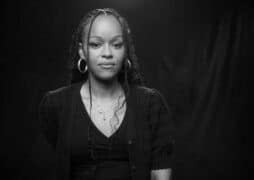
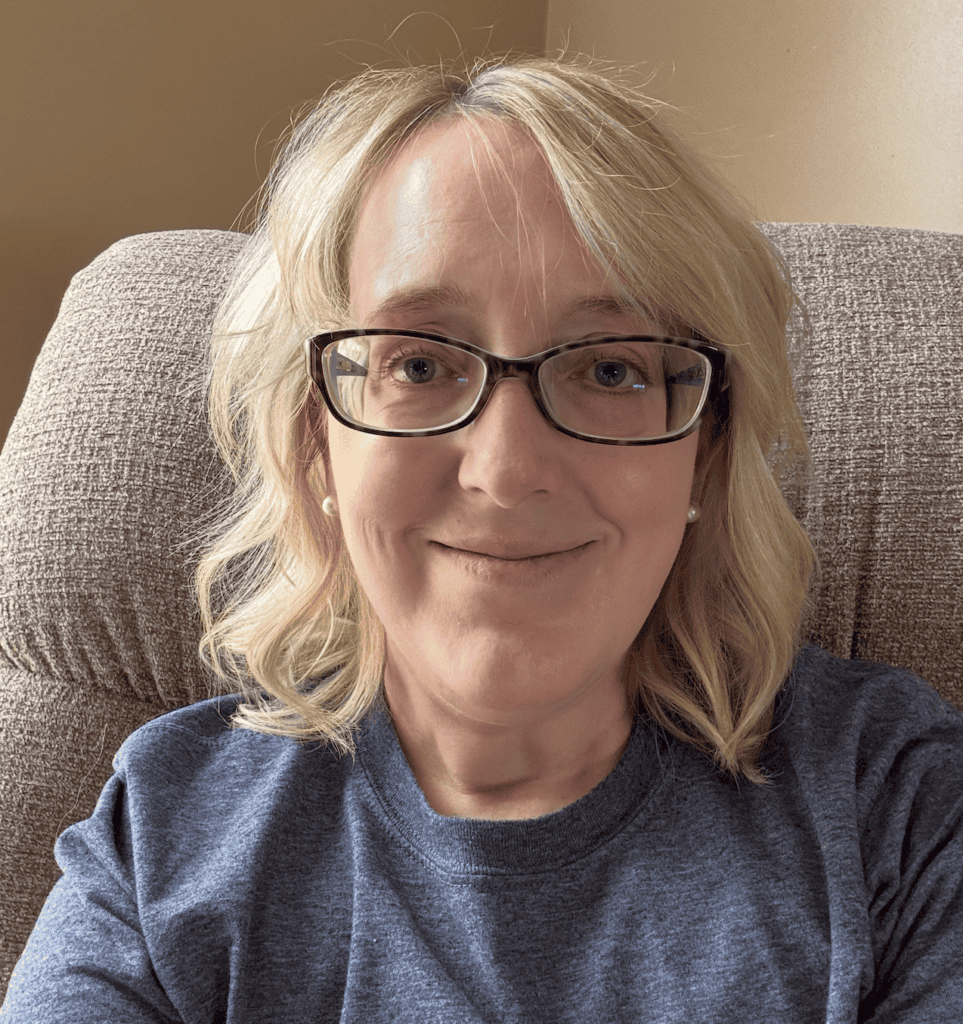
Leading up to her breast cancer diagnosis, everything in Brittany’s life was fairly routine: She and her husband were raising their two daughters, she was teaching second grade and working on her doctorate degree. “Everything was perfectly fine,” she said.
Routine Mammograms
Brittany began having screening mammograms when she turned 40. Her results were often abnormal, leading to follow-up tests and biopsies. “I had dense breasts,” she said. “So they started monitoring me every six months.”
In late 2022, Brittany went in for a screening mammogram. The radiologist noted a large area of calcifications in her left breast and ordered a biopsy. “They thought it was pretty suspicious, but given my history, I wasn’t really worried about it,” she said.
Breast Cancer Diagnosis
In January 2023, Brittany was in her classroom when she received her biopsy results: She had ductal carcinoma in situ (DCIS) – stage 0 breast cancer. “I really thought the call was going to be the usual, that I’d come back in six months,” Brittany said. “But she said I needed to see a breast surgeon and at that point, I was scared.”
Everything started off in a whirlwind. “You have a lot of doctor appointments. You have a surgeon, you have a nurse,” said Brittany. “I had a navigator call me and we set up genetic testing, which came back clear.”
Sharing the News
Brittany reached out to her husband immediately, but waited until she had more information to tell her daughters. “My husband was very of the mind of what do we need to do. He didn’t really get upset, but was more focused on how to fix the situation,” Brittany recalled. “My youngest daughter didn’t quite understand what was happening, but the oldest took it pretty hard.”
Complications
In addition to seeing abreast surgeon, Brittany was also referred to an oncologist. “I had started running really high fevers and they weren’t sure what was causing them,” she said. She had to do additional tests, blood work and scans. At first, the oncologist considered that she might have lymphoma, but that test was negative.
“I have autoinflammatory issues. I’ve had rheumatoid arthritis and Sjogren’s since I was 26, so I’ve got that on top of the breast cancer,” Brittany said. She’s on medications for these conditions along with the cancer medications.
Breast Surgery
Due to the size of the breast tumor, Brittany could not have a lumpectomy. She opted to have a nipple sparing bilateral mastectomy, during which her lymph nodes tested negative for any cancer. “Everything looked good,” she said.
Recovery from surgery went well. “I didn’t have considerable amounts of pain and healed really quickly,” Brittany said. “I never really felt bad about it. My body changed, but I never grieved it.”
Life Resumes
Brittany and her family settled back into the normal routines once she recovered from her surgery. For two years, life was good.
Metastasis
Then, in 2025, during a routine chest X-ray for Brittany’s autoimmune issues, a nodule was found on her lung. “A biopsy of the nodule in the lung showed that it was identical to the DCIS that I had two years prior,” said Brittany. It was deemed a metastasis, which is the spread of breast cancer beyond the breast and nearby lymph nodes (also called metastatic breast cancer).
“This really shocked me, it was huge blow and more terrifying than the first diagnosis,” said Brittany. “After the first diagnosis, I had an explosion of doctor appointments, and then it happened again. It’s a lot.”
Continuing Treatment
Brittany had five rounds of radiation therapy. Then she had her ovaries removed because the breast cancer was hormone receptor-positive and needed treatment with hormone therapy. “My doctor gave me a choice between having them removed or doing suppression shots,” she said. “I knew I had to get rid of the estrogen, so I opted for the surgery.” Brittany’s ongoing treatment include an aromatase inhibitor (a type of hormone therapy).
Finding Support
From her doctors to her friends and family, support is what’s helped Brittany stay positive. “Through all of this, I’ve been blessed with huge amounts of support. It really does take a village,” Brittany said. “I’ve never felt alone and I’ve grown so much stronger, but this journey is still super tough.”
Statements and opinions expressed are that of the individual and do not express the views or opinions of Susan G. Komen. This information is being provided for educational purposes only and is not to be construed as medical advice. Persons with breast cancer should consult their health care provider with specific questions or concerns about their treatment.