
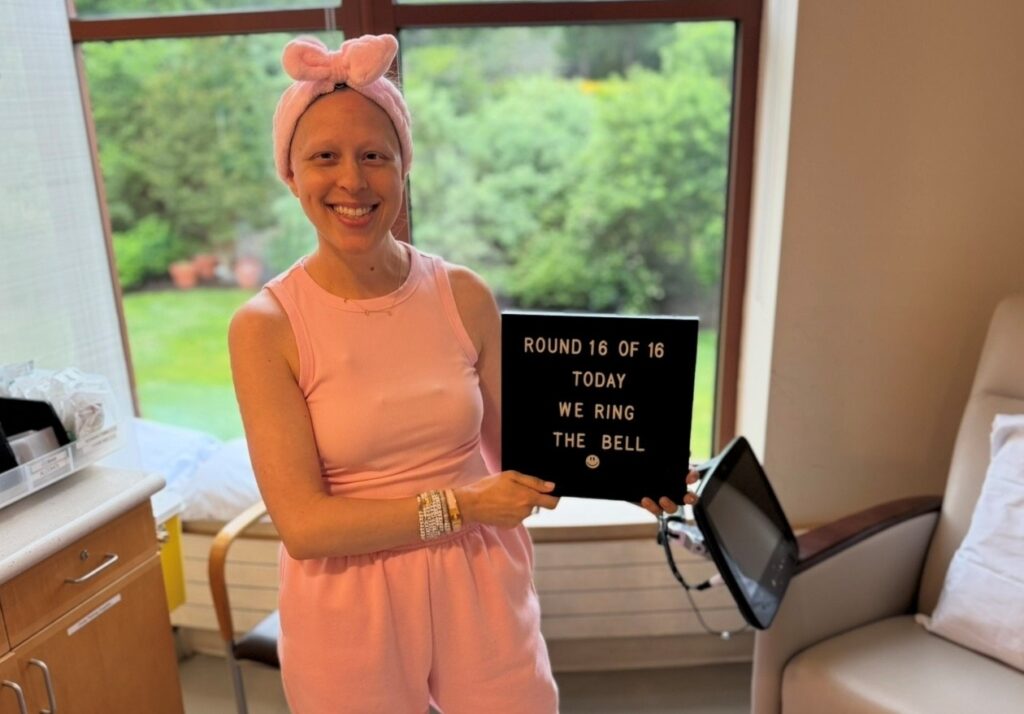
Krystina never imagined she would be diagnosed with breast cancer at 35. Discovering a small lump ultimately led to a diagnosis of triple negative breast cancer (TNBC) and the detection of an BRCA1 inherited gene mutation. As she navigated treatment, fertility decisions and the challenges of being a young woman with breast cancer, she found a community of survivors who helped her realize she wasn’t alone.
Discovering a Lump

Krystina remembers the exact moment she discovered the pea-sized lump that would change the way she thought about breast cancer forever.
It was Dec. 29, 2024. Krystina, a middle school teacher, was home on winter break with her then 6-month-old son, Eli. She was drying off after a shower when the lump caught her attention in the mirror.
“When you’re breastfeeding, you’re always checking to see what’s going on and if you have to pump or feed,” she said.
“When I saw it, I instantly knew it wasn’t a clogged milk duct. I’d had those before, and they were super painful. With this, there was absolutely no pain. It just appeared overnight.”
The Next Steps to a Diagnosis
Krystina reached out to her OB-GYN to schedule an appointment.
“I was an anxious mess because at that time, we had no known breast cancer history in my family,” she said. “But for some reason, in my head, I knew this was something serious.”
Krystina was able to see her doctor on Dec. 31. He recommended a breast ultrasound but noted she would most likely need to schedule a mammogram first. When the diagnostic mammogram found nothing, she immediately went to another room for an ultrasound. The radiologist then told her she needed a breast biopsy as soon as possible.
“When the doctor came in, she was as white as a ghost,” Krystina said. “She said it was an aggressive situation, and she was putting a rush order for a biopsy.”
Learning She Had Triple Negative Breast Cancer
On Jan. 8, four days after the biopsy, Krystina received the call with the results: she had breast cancer. The call brought on a whirlwind of questions and unfamiliar terms.
“I had no idea what receptors were. I thought you either had breast cancer or you didn’t,” she said. “I didn’t know there were types. You don’t know any of this information unless you’re in the situation. I learned while I was in the thick of it, literally trying to survive.”
Krystina soon learned she had triple negative breast cancer. During her first appointment with her oncologist, she discussed genetic testing.
Genetic Testing Uncovers a BRCA1 Gene Mutation

“Because I was young, healthy and had no other comorbidities, they encouraged me to get tested,” she said. “At the time, I didn’t realize that there were other cancers connected to BRCA1 and BRCA2 inherited gene mutations.”
BRCA1 and BRCA2 are the most well-known genes connected to breast cancer. Mutations in these genes can increase the risk of ovarian cancer, as well as pancreatic cancer, melanoma and other cancers.
Within a few weeks, the results came back. Krystina learned she carried a BRCA1 inherited gene mutation.
The next step was for her parents, brother and sister to undergo testing. Her father, brother and sister also learned they carried a BRCA1 gene mutation.
“I felt so guilty, but my sister quickly told me that I saved her life,” she said. “She got the ball rolling and scheduled a prophylactic mastectomy.”
Continuing Breast Cancer Treatment

As Krystina began 16 rounds of neoadjuvant chemotherapy, her mom received her own breast cancer diagnosis. She had ductal carcinoma in situ (DCIS), a non-invasive type of breast cancer, and underwent a mastectomy one month before Krystina’s own surgery.
“My mom felt so helpless that she couldn’t do anything,” she said. “After her diagnosis and mastectomy, she said the experience helped her understand what I was going to go through.”
Three weeks after Krystina’s final round of chemotherapy, she underwent a double mastectomy. Because of her BRCA1 gene mutation and residual disease found during surgery, she took a PARP inhibitor for a year.
“In some ways, survivorship can be harder than the actual cancer, because you can attribute any aches and pains to the treatment,” she said. “The minute you feel an ache in survivorship, there’s this instant fear. And with triple negative breast cancer, there isn’t additional treatment. There’s no aromatase inhibitors or tamoxifen. So, being prescribed the PARP inhibitor was almost like a comfort.”
Facing Breast Cancer as a Young Woman
Treatment brought challenges beyond physical side effects. At 35, Krystina often felt out of place, surrounded by patients who were much older and struggling to find resources that spoke to her experience.
“I would go into the imaging center, and I was the only young woman in the entire center,” she said. “Even when I got chemo, I never saw a young woman. And now I’m in multiple group chats with survivors across the country who are under 40.” Finding those connections helped Krystina realize she wasn’t alone, even if it sometimes felt that way.
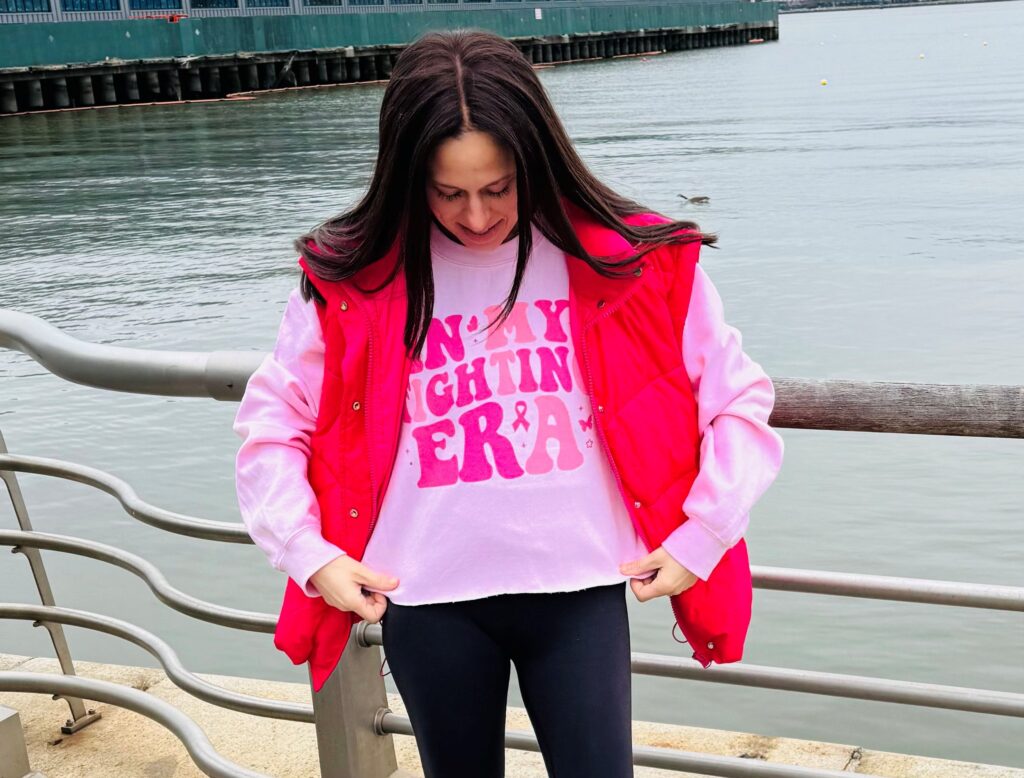
Making Difficult Decisions About Her Future
For Krystina, one of the biggest challenges was navigating decisions about her future family. Because of her increased risk of ovarian cancer, she made the difficult decision to undergo a hysterectomy.
“I always wanted to have four kids, so being told that wasn’t going to be in the cards for me was tough,” she said. “But a nurse told me, ‘You need to survive for the child you have, not the children you could have.’ To this day, it’s the best advice I’ve received.”
Click here for more information about the unique needs of young breast cancer survivors, including the impact of treatment on fertility.
Statements and opinions expressed are that of the individual and do not express the views or opinions of Susan G. Komen. This information is being provided for educational purposes only and is not to be construed as medical advice. Persons with breast cancer should consult their healthcare provider with specific questions or concerns about their treatment.