
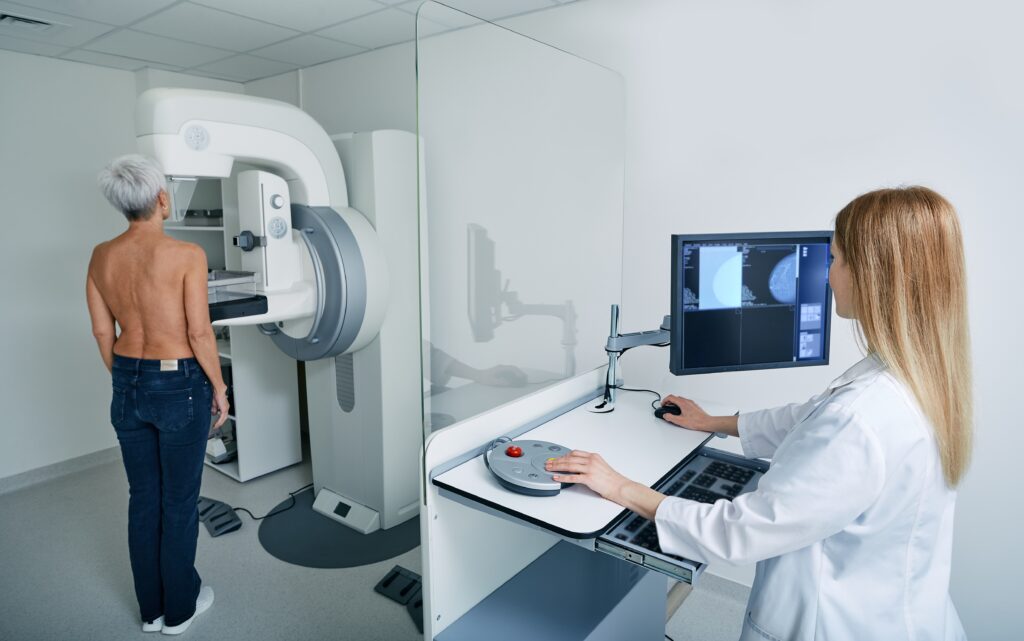
Mammography is the most effective screening test used today to find breast cancer in most women. Regular screening mammography (along with follow-up tests and treatment, if diagnosed) reduces the chance of dying from breast cancer. Below, we’re debunking seven of the most common mammogram myths, so you have the facts you need to make informed screening decisions with your health care provider.
Mammograms can find breast cancers at an early stage, which could mean less aggressive treatments and a higher rate of long-term survival. But with screening guidelines that do not always agree, and with misinformation constantly circulating on social media, it can be hard to know what to believe.
Myth #1: “The radiation from a mammogram can give me cancer.”
Today’s mammograms are high-quality images that are created from low doses of radiation. Because high doses of radiation can be damaging to cells, some people worry that mammograms could increase their risk of cancer. This fear is compounded by the fact that these screenings are often repeated over many years.
Fact: Mammograms use a very low dose of radiation. How much, exactly? A typical mammogram uses approximately 0.4 millisieverts (mSv), which is the same amount of radiation a person is exposed to from everyday life, over one to two months. In comparison, 3D mammograms can have slightly higher or lower levels of mSv. While mammograms do include a small amount of radiation, their benefits far outweigh the risks.
Myth #2: “I only need a mammogram if I find an unusual change like a lump.”
Many people believe that breast cancer only occurs with a noticeable lump in the breast. As long as their breasts look and feel normal, there is no reason to have a screening. Some people believe they will be OK if they just pay attention to any new or unusual changes in their breasts.
Fact: Breast cancer can develop before any symptoms like a noticeable lump occur. Screening mammograms can detect early abnormalities and give people a chance to get additional tests or treatment before there are any signs or symptoms. Choosing to wait until a lump forms means waiting until the cancer has grown. Any changes to the breast or underarm area should be relayed to your health care provider immediately. Mammograms help find breast cancer at an early stage when the chances of survival are highest.
Myth #3: “I don’t have a family history of breast cancer, so I don’t need to be screened.”
Many people mistakenly believe that no family history of breast cancer means they have a low risk of developing the disease. While inherited genetic changes and family history certainly are factors, they are not the only factors that predict breast cancer risk.
Fact: Having no family history does not mean a lower chance of developing breast cancer. In fact, most people with breast cancer do not have a family history of the disease. And only 5-10% of breasts cancers in women are due to inherited genetic mutations. Risk can be influenced by other factors including age, personal medical history, and other biological and environmental influences. While your family health history is a great tool for better understanding your risk, it should not be the only factor that guides your screening decisions.
Myth #4: “Compression from a mammogram can cause cancer cells to spread.”
Some people worry that the pressure applied during a mammogram can “squish” cancer cells, causing them to spread throughout the body. There is also a fear that compression can cause an existing tumor to rupture.
Fact: There is no scientific or medical evidence showing that a mammogram can cause cancer cells to spread or a tumor to rupture. In fact, recent studies have shown that mammograms do not cause the spread of cancer cells, even in women with a higher risk of breast cancer. However, women with implants should ensure their technicians adjust the pressure to help prevent implant rupture.
Myth #5: “I’m only 40, so I’m too young to think about breast cancer.”
Because breast cancer is a disease often associated with older women, many young women (under the age of 50) assume that screening is not necessary, until they turn 50 or develop new symptoms.
Fact: Breast cancer can occur at any age, and your personal screening decisions should be based on understanding your own personal risk, as well as the current medical guidelines. All women at average risk should begin screening at age 40, unless you and your doctor have developed a different screening plan. Those at higher risk may need to be screened earlier or more often.
While there is no such thing as a perfect screening tool, mammograms are still the gold standard for detecting breast cancer at its earliest stages. To make the best decisions for your health, don’t let myths stand in the way. Discuss your individual risk factors with your doctor and together, decide on a screening plan that’s right for you.
Explore more educational resources about screening mammograms:
- Learn more about what to expect during a mammogram.
- Read more about mammograms and personal breast cancer risk.
- Explore the Top 5 Reasons to Get a Mammogram.
- Download our Questions to Ask Your Doctor: Screening Mammograms worksheet.